ABC News reports:
"A new scientific examination by the non-profit food fraud detectives, The U.S. Pharmacopeial Convention (USP), discovered rising numbers of fake ingredients in products from olive oil to spices to fruit juice.
"Food products are not always what they purport to be," Markus Lipp, senior director for Food Standards for the independent lab in Maryland, told ABC News.
In a new database to be released Wednesday (2/20/2013), and obtained exclusively by ABC News today, USP warns consumers, the FDA and manufacturers that the amount of food fraud they found is up by 60 percent this year.
Among the most popular targets for unscrupulous food suppliers? Pomegranate juice, which is often diluted with grape or pear juice. Most recently the FDA issued an alert for pomegranate juice mislabeled as 100 percent pomegranate juice, as well as one for the adulteration of honey.
USP tells ABC News that liquids and ground foods in general are the easiest to tamper with:
Olive oil: often diluted with cheaper oils
Lemon juice: cheapened with water and sugar
Tea: diluted with fillers like lawn grass or fern leaves
Spices: like paprika or saffron adulterated with dangerous food colorings that mimic the colors
Milk, honey, coffee and syrup are also listed by the USP as being highly adulterated products.
Also high on the list: seafood. The number one fake being escolar, an oily fish that can cause stomach problems, being mislabeled as white tuna or albacore, frequently found on sushi menus.
National Consumers League did its own testing on lemon juice just this past year and found four different products labeled 100 percent lemon juice were far from pure.
"One had 10% lemon juice, it said it had 100%, another had 15% lemon juice, another...had 25%, and the last one had 35% lemon juice," Sally Greenberg, Executive Director for the National Consumers League said. "And they were all labeled 100% lemon juice."
Straight from the Horses' Mouth
In addition, 70% of all ground beef was found to contain "pink slime".
Butchers use "meat glue" to create "bigger" cuts of beef, chicken, lamb and fish, even though it leads to much higher levels of food poisoning.
British hamburgers were found to contain horse meat and pork ... and it could happen in the U.S. as well. (says Forbes)
Indeed, modern red meat is arguably not really meat at all.
Source
And selling genetically modified food without labeling them as such is arguably food fraud as well, since a large majority of Americans want genetically modified foods to be labeled. Genetically engineered foods have been linked to obesity, cancer, liver failure, infertility and all sorts of other diseases, and the Food and Drug Administration doesn't even test the safety of such foods.
Wednesday, February 20, 2013

Tuesday, February 19, 2013
FDA approves GMO flu vaccine
"A new vaccine for influenza has hit the market, and it is the first ever to contain genetically-modified (GM) proteins derived from insect cells. According to reports, the U.S. Food and Drug Administration (FDA) recently approved the vaccine, known as Flublok, which contains recombinant DNA technology and an insect virus known as baculovirus that is purported to help facilitate the more rapid production of vaccines.
According to Flublok's package insert, the vaccine is trivalent, which means it contains GM proteins from three different flu strains. The vaccine's manufacturer, Protein Sciences Corporation (PSC), explains that Flublok is produced by extracting cells from the fall armyworm, a type of caterpillar, and genetically altering them to produce large amounts of hemagglutinin, a flu virus protein that enables the flu virus itself to enter the body quickly.
So rather than have to produce vaccines the "traditional" way using egg cultures, vaccine manufacturers will now have the ability to rapidly produce large batches of flu virus protein using GMOs, which is sure to increase profits for the vaccine industry. But it is also sure to lead to all sorts of serious side effects, including the deadly nerve disease Guillain-Barre Syndrome (GSB), which is listed on the shot as a potential side effect.
FDA also approved flu vaccine containing dog kidney cells
Back in November, the FDA also approved a new flu vaccine known as Flucelvax that is actually made using dog kidney cells. A product of pharmaceutical giant Novartis, Flucelvax also does away with the egg cultures, and can similarly be produced much more rapidly than traditional flu vaccines, which means vaccine companies can have it ready and waiting should the federal government declare a pandemic.
Like Flublok, Flucelvax was made possible because of a $1 billion, taxpayer-funded grant given in 2006 by the U.S. Department of Health and Human Services (HHS) in contracts to six manufacturers to develop cell-based flu vaccine technology in the United States. Although its use in flu vaccines is new, cell-based vaccine technology has been around for years, offering a faster, more reliable alternative to egg culture.
In 2009, spurred by difficulties in growing vaccine for the H1N1 swine flu pandemic, the U.S. Department of Health and Human Services provided Novartis with nearly $500 million to build the first U.S. facility capable of producing cell-based vaccine for seasonal and pandemic flu in the United States. Novartis picked up the rest of the estimated $1 billion price tag."
Source: Reuters
(My cousin's daughter got Guillain-Barre Syndrome as a child from vaccinations required to attend public school. She is now an adult but still has the nerve damage.)
I don't like vaccines much anyway because the carrier is usually mercury, although I've had most of them as a child... and agree they have saved many lives worldwide. Now that at least one (two more are in the wings, nearing FDA approval) is GMO gives me more reason for caution and hesitation.
Sunday, February 17, 2013
Forensic Nutritionist?
I always thought Forensics were just used to solve crimes, but several years ago I met a man who called himself a "Forensic accountant" (the study and interpretation of accounting evidence).
Now on television, I see Forensic anthropologists (the application of physical anthropology in a legal setting, usually for the recovery and identification of skeletonized human remains), and on the History 2 channel I see Forensic botany (the study of plant life in order to gain information), Forensic geology (deals with trace evidence in the form of soils, minerals and petroleum). There's also Forensic archaeology and Forensic seismology. They all seem to be searching for the Truth about something.
So, I looked up the word. It comes from the Latin forēnsis, meaning "of or before the forum." The two given meanings are:
1. Relating to, used in, or appropriate for courts of law or for public discussion or argumentation.
2. Of, relating to, or used in debate or argument.
Based on those descriptions, I think I could easily give myself the title of Forensic Nutritionist©, since I'm always seeking the truth about our foods vs. the fake foods manufactured and advertised as food... and this blog is certainly my Forum.
Since I'm now napping a lot during my slow recovery, I'm reading Taste, Memory... Forgotten Foods, Lost Flavors, and Why They Matter by David Buchanan. His descriptions of some of the lost foods he has hunted down and now has growing in his gardens make my mouth water, and I want to search of the similar foods that were widely grown 200 years ago in my region. His are not merely heirlooms, but 90% or more are lost heirloom foods that have taken a lot of time to track down. All are open-pollinated and many have regional growing requirements.
In the book, David Buchanan asked John Barker (the Maine apple guy, founder of Fedco Trees) why he thinks we have abandoned so many old foods. John answered that in his opinion, "we have forgotten how to think and act independently. We follow the rules, find jobs, settle down, and turn agricultural production over to others.
"Food today is a tradable commodity, and as such it must adapt to the market, which demands consistency and discourages variety. It's no accident we find limited selections in our grocery stores."
That, however, does not mean we cannot track down and grow a few tasty old-timers in a small corner of our home garden or patio. We can be sure they aren't GMO, and they might have taste far surpassing our current homegrown heirlooms. The Ark of Taste is a good starting place, as are organizations like Seed Savers Exchange who put out a yearbook of over 20,000 listings of available but endangered seed, offered by members worldwide (seeds not commercially available nor ever listed online).
Meanwhile, Monsanto is searching out lost and almost forgotten foods in foreign places like South America, Russia and the Middle East, and getting patents on them.
Saturday, February 16, 2013
GMO Valentine Kisses
Did your honey give you Hershey's chocolate kisses for Valentine's Day? If so, and you are in the USA, you received GMO kisses. Valentine's Day is also the day where once again giant corporations try to enrich themselves by encouraging Americans to consume endless amounts of sugary sweets.
All Hershey's chocolate products sold in the US contain GMO's, but they source organic and non-GMO ingredients in their chocolates sold in foreign countries. That’s right, Hershey’s went GMO free in Europe in 2010, but keeps peddling GMOs in America.
Hershey’s Top Chocolate Products: Hershey’s chocolate bars, Reese’s, Hershey Kisses, Nutrageous, 5th Avenue, Almond Joy, Caramello, Heath, Kit Kat, Mounds, Mr. Goodbar, Rolo, Symphony, Take5, Whatchamacallit, York and Dagoba.
While California voters were trying to support their basic right to label genetically engineered foods, the Hershey Company, the nation’s largest chocolate-maker, contributed $519,000 to defeat Prop 37 and your Right to Know what’s in your food, alongside Monsanto, the world's largest biotech seed company, who dumped in $8.1 million to stifle democracy and transparency.
In the past, many large U.S. food producers have argued that reformulating their products to exclude GMOs is not cost effective. But why it was worthwhile for Hershey's to change its product formulas for the European market, but not for the U.S. market, so far remains a question without an answer.
Wednesday, February 13, 2013
Soil Tests and Land-Grant Universities
The Morrill Acts of 1862 and 1890 established Land-Grant Universities to focus on the teaching of
practical agriculture and science
in contrast to the historic
practice of higher education focusing on an abstract liberal arts curriculum.
Today, there are 76 Land-Grant Universities in the US, with primary support and research funding from BigAg (like Monsanto, Dow, BASF, Bayer and Syngenta). All our Extension Agents are educated at Land-Grant Universities, and are biased in favor of BigAg, because that's what they have been taught.
Thus, it is with some trepidation that I'm sending soil samples to Virginia Tech. I did that 6 years ago, and although I no longer have the results copy, I recall it was heavy on synthetic NPK application. No mention of organic matter, or growing organically.
To be fair, 99% of what the Extension Service offers is wonderful (and free) information, everything from raising rabbits to home canning safety.
Virginia Cooperative Extension is an educational outreach program of Virginia's land grant universities: Virginia Tech and Virginia State University are a part of the national Cooperative State Research, Education, and Extension Service, an agency of the United States Department of Agriculture (USDA).
Routine soil testing is free through Virginia Extension Service, plus an additional (optional) $6 per sample to test for soluble salts and organic matter. I don't remember if those additional tests were available 6 years ago, or I just didn't have the money. With 19 acres, I need soil tests in several areas.
One of these days I hope to get a full-blown professional soil test done by AgLabs. Their focus is on biological agriculture, not industrial agriculture.
Here's a List of Land-Grant Universities in the US.
Monday, February 11, 2013
Learning more about nutrition
Those of you who follow this blog know that I eat better (healthier) than the vast majority of Americans, so I have thought I had a good handle on nutrition.
With this latest hospitalization I was in Wake Forest Baptist hospital in NC, and they have a system that posts ALL lab results to MyWakeChart where I can review them online. There are over a hundred since I was admitted Jan. 30. I was discharged Monday Feb. 4th and went back for an Acute Care follow-up appointment on Friday Feb, 8th.
The lab results from Friday's blood draw were posted before I even got home!
My hemoglobin, hematocrit, platelets, white and red blood cell count, phosphorus and iron are all still way below normal.
My potassium, magnesium, calcium, sodium, chloride, and protein levels are all barely in the low-low-normal range.
I eat pretty well, so why my body isn't processing/absorbing these
things baffles me. The MyWakeChart merely posts lab results, not how
and why I may have gotten there.
I'll have a raft of questions for
Digestive Health when I go on March 11, but the quest for more nutritional answers might be a long investigative haul down many avenues.
Wednesday, February 6, 2013
Institutional Food, Again
After being MIA for about 2 weeks, I'm starting to think about food and health again.
Recently I started throwing up blood (which I hadn't done for 6 years), and my sister called 911 for an ambulance. They took me to the local hospital (where they don't have an endoscopy team) so they transferred me to Wake Forest in Winston-Salem, NC, about a 2-1/2 hour drive. There they put me on a ventilator in order to do an EGD to stop the bleeding without possibly obstructing my airway, and I NEVER want to be on a ventilator again. To awaken and find my wrists and ankles tied down, and a balloon-feeling thing in my throat was frightening.
They repaired a Mallory-Weiss Tear (usually caused by forceful or long-term vomiting or coughing) and a small adjacent arterial bleeder in my stomach. I spent 2 days in ICU, and almost a week in a regular room. I have enough punctures from IV's and blood draws and blood sugar finger pricks that I look like I was fighting with a porcupine and lost. Both arms are black and blue from the armpit to my fingers.
For 4 days I was only allowed a plain liquid diet, and that was unpleasant. Most liquid things available were high in HFCS or sugars, and high in sodium.
Institutional Food, BLECK! This hospital, part of a medical school, was better than most I've seen, and they even have a gluten-free section on the menu. That encourages me to think not ALL institutions are destined to serve swill.
I did have a decent slice of grilled salmon with a baked potato and broccoli once I was allowed solid food.
When they discharged me, the hospital sent me back to Virginia via Greyhound, to the bus station downtown last night. Fortunately my neighbor had the day off and drove into town to fetch me. We have a foot of snow on the ground, and it was 10º here yesterday early in the morning, whereas it was a balmy 45º when I left Winston-Salem in the afternoon. I'm glad to be home, though.
They discovered I have a small aneurysm on the aortic arch, which we will watch and probably repair in 3 months unless it gets worse sooner.
In the meantime, my doctors said my recuperation will be slow. All the UTI-kidney problems I had back in November and December are part of the overall trauma that led up to this. I have zero energy, and I'm sleeping 15-20 hours a day. Some of that is due to the medications, which will not continue for very long (I hope).
I go back in 2 days for a hospital follow-up, more blood work, and a full pulmonary function test. Then I have some appointments booked in March, and in May we may do the surgical repair of the aneurysm if I have healed enough. Thankfully, it's half the distance I was driving for medical care at UVA medical school and I really liked the medical team approach at Wake Forest. I'm cancelling the appointments already scheduled next week at UVa since the Wake Forest appointments are for the same things.
UVa and Wake Forest are ranked almost the same in Medical School Rankings. Of course, I worked many years for the #1 ranked medical school, Johns Hopkins, so I have a bias... but Hopkins is too far away for me to seek treatment there.
I have to draft and print a copy of the dietary protocol I follow for my digestive health doctor, and it may prove to be fodder for a post here. My docs spent a lot of time trying to get my electrolytes balanced, and my hemaglobin up. They seem to think the imbalance was from extended body trauma and not my diet, from what I could tell them I eat. This is the first time I've seen Residents, Fellows, and Doctors willing to discuss food/diet that's NOT the S.A.D. (Standard American Diet). Of course that wasn't ALL of them, but quite a few.
Friday, January 25, 2013
Food for Thought while I'm "absent"
"There is enough in the world for everyone’s needs, but
not enough for everyone’s greed."
Mahatma Gandhi
ps... I should have added that I awakened this morning to a winter storm of sleet and freezing rain even though the weather folks forecasted it would be mostly snow.
After the several days without power last week, I would have thought there were few trees left to fall on power lines, but my county and the surrounding counties are 90-95% forested, and electric power is intermittent again.
Sunday, January 20, 2013
Power Outage, and Apologies
I've been without electric power (and therefore no internet connection) thanks to a foot of wet heavy snow several days ago. Even now the power is still intermittent and while I'm much better prepared for emergencies than most people, having no internet connection is a PITA.
I know there are several Comments pending my attention (mostly about the recent post on Omega-3 and Omega-6 "Fats") that require a response, but I need to research some of the questions about grapeseed oils, and even though I think I know the answer, I want to be sure about what I post.
However, with the power going off and on, it may be another day or two before I can reliably get to them. Please be patient.
Thursday, January 17, 2013
One Food Plan Doesn't Fit Everyone, Part 3, Fats
Fats.
Did you know that our brains are about 60 percent fat? The fats we eat strongly influence our level of brain function. Some nutritional anthropologists believe the human brain would not have developed as it did without access to high levels of DHA (a type of fat) found in fish and wild game.
Just two generations of eating high omega-6 fats and low omega-3 fats can lead to profound and detrimental changes in brain size and function.
Saturated fats: Saturated fats are found in animal products such as butter, cheese, whole milk, ice cream, cream and fatty meats. They are also found in some tropical plants and vegetable oils such as coconut, palm and palm kernel.
Saturated fats are not as dangerous as you think. In fact, coconut oil is quite healthy and is the best oil to use for cooking since it is far less likely to be damaged through heating.
A misguided fallacy that persists to this day is the belief that saturated fat will increase your risk of heart attacks. This is simply another myth that has been harming our health for the last 30 or 40 years. The truth is, healthy saturated fats from high quality minimally processed animal and some vegetable sources provide a concentrated source of energy in your diet, and they provide the building blocks for cell membranes and a variety of hormones and hormone like substances.
When you eat saturated fats as part of your meal, they slow down absorption so that you can go longer without feeling hungry. In addition, they act as carriers for the important fat-soluble vitamins A, D, E and K. Dietary fats are also needed for the conversion of carotene to vitamin A, for mineral absorption, and for a host of other biological processes.
It's important though to understand that not all saturated fats are the same. There are subtle differences that have profound health implications, and if you avoid eating all saturated fats, your health will likely suffer as a result. There are in fact more than a dozen different types of saturated fats, but you predominantly consume only three: stearic acid, palmitic acid and lauric acid.
It's well established that stearic acid (found in cocoa and animal fat) has no adverse effects on our cholesterol levels, and actually gets converted in our liver into the monounsaturated fat called oleic acid. The other two, palmitic and lauric acid, do raise total cholesterol. However, since they raise "good" cholesterol as much or more than "bad" cholesterol, you're still actually lowering your risk of heart disease.
Omega-3 fats improve our cell's response to insulin, neurotransmitters and other messengers. They also help the repair process when our cells are damaged. On the other hand, omega-6 fats are pro-inflammatory and contribute to insulin and membrane resistance, altering our moods, and impairing learning and cell repair. To avoid high levels of omega-6, it is important to avoid all vegetable seed oils. (That does not include olive oils, or palm and coconut oils, none of which are from seeds.)
Omega 3’s in beef that feed on grass is seven percent of their total fat content, compared to just one percent in grain-only fed beef. Grass-fed beef also has the recommended ratio of omega 6 to omega 3 fats (a minimum of 3:1 although 1:1 is much better).
Please understand that it's not only necessary to consciously consume omega-3 fats, but it is just as important to lower our omega-6 fat intake. If we don't lower our omega-6 fats to acceptable levels, our omega 6 to omega 3 ratio will not be low enough, and we will not receive many of the wonderful benefits of omega-3 fats such as reduced risk of heart disease, cancer, stroke, Alzheimer's, arthritis and many other degenerative illnesses.
Our intake of omega-6, a fat found in corn, soy, sunflower and other vegetable oils, is far too high. The ideal ratio of omega-6 to omega-3 should be 1:1, but the typical American's ratio ranges anywhere from 15:1 to 50:1
If you only can afford to buy one organic food it should be butter. It is not uncommon for non-organic butter to have up to 20 times the level of pesticides of non-organic fruits and vegetables.
Partial source: Mercola.com
I have more comments about the Omega-3 in eggs from pastured free-range hens... but that's for another post.
Friday, January 11, 2013
One Food Plan Doesn't Fit Everyone, Part 2
Continued from here.
Just a brief bit here on the Proteins / Amino-acids we all need. (Some in-depth info on Fats coming soon...)
Proteins are nutrients that are essential to the building, maintenance and repair of our body tissues such as our skin, internal organs and muscles. They are also the major components of our immune system and hormones.
Proteins are made up of substances called amino acids, 22 of which are considered vital for our health. Our body can make 14 of these amino acids, but the other eight (or nine, some controversy there), known as essential amino acids, must be obtained from what we eat. Proteins are found in all types of food, but only meat, eggs, cheese and other foods from animal sources contain complete proteins, meaning they provide the eight/nine essential amino acids.
When proteins are digested or broken down, amino acids are left. The human body needs a number of amino acids to:
I would be remiss if I didn't mention here that grocery-store eggs that say "high in Omega-3" should be avoided... not because Omega-3 isn't good for us (It really isgood great for us!).
Typically those chickens are
fed poor-quality sources of omega-3 fats that are already oxidized. Not good for the chicks, and certainly not good for us.
Just a brief bit here on the Proteins / Amino-acids we all need. (Some in-depth info on Fats coming soon...)
Proteins are nutrients that are essential to the building, maintenance and repair of our body tissues such as our skin, internal organs and muscles. They are also the major components of our immune system and hormones.
Proteins are made up of substances called amino acids, 22 of which are considered vital for our health. Our body can make 14 of these amino acids, but the other eight (or nine, some controversy there), known as essential amino acids, must be obtained from what we eat. Proteins are found in all types of food, but only meat, eggs, cheese and other foods from animal sources contain complete proteins, meaning they provide the eight/nine essential amino acids.
Amino acids are organic compounds that combine to form proteins. Amino acids and proteins are the building blocks of life.
When proteins are digested or broken down, amino acids are left. The human body needs a number of amino acids to:
- Break down food
- Grow
- Repair body tissue
- Perform many other body functions
- Essential amino acids
- Nonessential amino acids
- Conditional amino acids
- Essential amino acids cannot be made by the body. As a result, they must come from food.
- The nine essential amino acids are: histidine, isoleucine, leucine, lysine, methionine, phenylalanine, threonine, tryptohan, and valine.
- "Nonessential" means that our bodies produce an amino acid, even if we don't get it from the food we eat.
- They include: alanine, asparagine, aspartic acid, and glutamic acid.
- Conditional amino acids are usually not essential, except in times of illness and stress.
- They include: arginine, cysteine, glutamine, tyrosine, glycine, ornithine, proline, and serine.
I would be remiss if I didn't mention here that grocery-store eggs that say "high in Omega-3" should be avoided... not because Omega-3 isn't good for us (It really is
Monday, January 7, 2013
One Food Plan Doesn't Fit Everyone
Yep, true statement. Each of us has about 300 million activities taking place at the cellular level at any given moment, and it stands to reason that what is best for my body may not be the same for yours.
However, there are some fundamentals that prove to hold true across all body types, all blood types, and other idiosyncratic differences. For example: high fructose corn syrup. Studies have shown that cancer cells grow 7 times faster on a diet of HFCS over natural sugar. The implications are that cancer cells proliferate on natural sugars anyway, just slower... and they may, but I have no statistics to prove that statement.
For starters about foods in our daily diet, let's look at carbohydrates. Most of us eat too many simple carbs, and too few complex carbs. For me personally, I have to be careful to limit my complex carbs, and not include much in the way of grains and potatoes. Your body may be different.
Carbohydrates provide fuel for our bodies, in the form of glucose or sugar. There are two types of carbohydrates -- simple and complex. Simple carbohydrates are sugars, such as the ones found in candy, fruits and baked goods. Complex carbohydrates are starches found in beans, nuts, vegetables and whole grains.
Two-thirds of all us Americans are overweight, if not obese. We have an epidemic on our hands! This is the result of eating far too many processed foods and believing the low-fat diet myth. (I'll cover that in another post.)
What most people don't know is that we don't actually need carbohydrates -- they are not essential for survival, and the RDA for carbs is actually zero. If we ate no carbohydrates, like many traditional Eskimos and other indigenous peoples do do, we would survive as long as we had enough high-quality protein, fat, water and minerals.
While both grains and vegetables are carbohydrates, most grains should be avoided and most vegetables are acceptable. Our bodies function better with the carbohydrates in vegetables rather than grains because it slows the conversion to simple sugars (glucose) and decreases our insulin levels Grain carbohydrates, on the other hand, will increase our insulin levels and interfere with our ability to burn fat.
Highly Recommended Vegetables:
Asparagus
Avocado (actually avocados are a fruit)
Beet greens
Bok Choy
Broccoli
Brussels sprouts
Cauliflower
Celery
Chicory
Chinese cabbage
Chives
Collard greens
Cucumbers
Dandelion greens
Endive
Escarole
Fennel
Green and red cabbage
Kale
Kohlrabi
Lettuce: romaine, red leaf, green leaf
Mustard greens
Onions
Parsley
Peppers: red, green, yellow and hot
Spinach
Tomatoes
Turnips
Zucchini
Use these vegetables sparingly due to their high carbohydrate levels:
Beets
Carrots
Eggplant
Jicima
Winter Squash
Avoid altogether:
Potatoes
Source
Friday, January 4, 2013
Following my own advice, or Resolutions
For several years on this blog, I have advocated Real Foods... and for the most part, I have eaten that way. Several years ago I went on a grain-free and legume-free diet, and my health was the BEST ever in the many years since I started to notice aging.
But like most humans, my downfall was succumbing to the addictions of ubiquitous carbs, found in almost everything we eat, whether we realize it or not.
The carbs in question were not so much the sweet carbs like donuts or desserts, but the carbs found in grains, and primarily in wheat. Turns out it's NOT just the carb content found in wheat, but something far more problematic: the wheat grain itself. Dr. William Davis asserts that since the 1960's and later, wheat has been hybridized (but not GMO wheat) to have shorter stalks (making harvest easier) and heavier seed heads (growing more wheat per acre). However, this hybridization has also resulted in some characteristics in wheat that are NOT desirable, such as how it affects the human body, and encourages the consumption of an additional 400+ calories per day, 24/7/365. (You'd need to read the book for details.)
Dr. Davis wrote Wheat Belly on the dangers of wheat, and a just-released cookbook of wheat-free recipes. While I haven't actually read his first book, I have read numerous interviews with him online, and what I read jives with my own experience of what happens with giving up grains. I also admit to dragging my feet into accepting his theories, yet HOW can I deny my own experiences?
To that end, I'm giving up wheat again, despite how much I LOVE a fresh, warm loaf of sourdough bread straight from my oven... or pancakes, or pasta or pizza... I have found many recipes online, including some from Dr. Davis' cookbook, for decent tasting substitutions for wheat, even a pizza crust!
Several years ago, I read that grains in times past were considered only as survival/famine foods. Makes sense to me, even though the American Food Economy today is largely based on cheap wheat grain in everything, even beer.
Wednesday, January 2, 2013
Belgian Endive Roots are Growing!

Well, they aren't growing quite as I hoped, partly from a lack of water in the bottom of the potting soil and inattention on my part. Nor are they developing the perfect "heads" as seen in the grocery stores. ('ll have to research how to get them to grow into "heads" better.)
However, they ARE growing out in the root cellar, and I'm encouraged enough to try again next fall!
Here's the post on beginning this project.
Sunday, December 23, 2012
So hallowed and so gracious is the time...
No planets struck on 12-12-2012, but let us hope the other predictions of 12-12-12 opening the door to a thousand years of Peace does indeed come to pass.
The description Shakespeare used to describe what happens at the time of Christmas celebration causes me to hope the same "hallowed and gracious" time will apply for a thousand years.
The bird of dawning singeth all night long;
And then, they say, no spirit can walk abroad;
The nights are wholesome; then no planets strike,
No fairy takes, nor witch hath power to charm,
So hallowed and so gracious is the time.
Hamlet, 1.1.157
Wishing All my Readers a lovely holiday, whatever your religious beliefs...
Saturday, December 22, 2012
Tip for Preppies
 |
| Photo By SmartBoyDesigns |
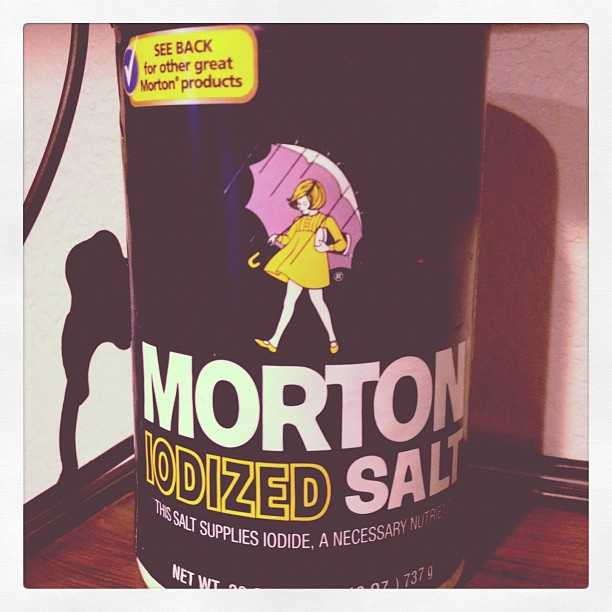
Salt. Many folks have stockpiled some salt in their prepper food lockers, hopefully iodized because iodine is SO important to health, and we get it from so few foods. However, just yesterday I discovered the iodine added to salt is fragile and dissipates rapidly, which means if the salt is more than a few months old, the iodine has virtually vanished.
This is equally important for those with thyroid problems who need the iodine, aqnd those at risk of goiter problems in the absence of iodine. Worldwide, iodine deficiency affects about two billion people and is the leading preventable cause of mental retardation. The USDA recommends a minimum of 150 mcg of iodine per day for both men and women.
Iodine was added to salt around 1924, at the request of government initiatives, due to the growing need for regulation of iodine deficiency disorders. In the 1920′s era in the United States, the Great Lakes and Pacific Northwest region of the country experienced high incidences of goiter (a common thyroid-malfunction-based condition). This was because their soil levels were extremely low in iodine, and people weren’t eating iodine rich foods .
To be on the safe and healthy side, I suggest adding some dried kelp to your storage locker. Dried seaweeds are a good source of iodine as well as many trace minerals, and is often salty enough to use in place of salt, or with a lesser amount of salt.
I have several quart jars of seaweeds in my pantry, notably kombu (kelp), hiziki, dulse, nori (in sheets) and Wakame. Probably that's not enough to have in storage, and I live far from the coast where seaweed is easily harvested.
1 tablespoon of Kelp contains about 2000/mcg of iodine, 1 tablespoon of Arame contains about 730/mcg of iodine, 1 tablespoon of Hiziki contains about 780/mcg of iodine, 1 one inch piece of Kombu contains about 1450/mcg of iodine, 1 tablespoon of Wakame contains about 80/mcg of iodine. I recommend sprinkling them in soups or on salads.
If you have eaten a California Roll, you have eaten the seaweed called Nori.
 |
| Nori Sheet by psd |
 | ||
| Oarweed by La.Catholiquehttp://www.flickr.com/photos/lacatholique/6118562625/ |
Here is a whole big thicket
of oarweed kombu. In OR, no license is required for personal seaweed
harvesting, although there is a limit of 10 lbs per person. For WA, you must
obtain a license through the WA Dept. of Fish and Wildlife. It's also important
to check for closures or other health risks prior to harvesting. See this site
for contacts for WA state. http://wdfw.wa.gov/fishing/shellfish/shellfish_seaweed_rules.html
 | ||||
| Kelp Drying in the sun, by garycycles3 |
I happen to like Dulse a lot; it makes a slightly sweet rather than salty snack just by itself. I am out of it, and I couldn't find a decent free photo on the internet to use here. Dulse is one of the red algaes, whereas kelp is considered a brown algae.
There are many edible seaweeds. Check out Edible Seaweed here.
How to prepare and cook seaweed.
Thursday, December 20, 2012
William Davis, MD, on Wheat Belly
The book Wheat Belly by the Cardiologist William Davis has been on my Wish List for months now, and I have read many favorable things about the book, and the connection of modern wheat to our obesity crisis. Just yesterday I came across a series of 6 YouTube videos where he explains the basis for his book.
I thought some of you may be interested in watching them if you have a lull in this hectic holiday season. By the Way, he has a cookbook, Wheat Belly Cookbook: 150 Recipes to Help You Lose the Wheat, Lose the Weight, and Find Your Path Back to Health that will be released Dec. 24.
I thought some of you may be interested in watching them if you have a lull in this hectic holiday season. By the Way, he has a cookbook, Wheat Belly Cookbook: 150 Recipes to Help You Lose the Wheat, Lose the Weight, and Find Your Path Back to Health that will be released Dec. 24.
Part 1
Part 2
Part 3
Part 4
Part 5
Part 6
His Blog
I've been trying to eliminate a lot of wheat from my daily fare, but it's hard... wheat is IN everything! However, I have ordered some Einkorn flour to mix with almond or coconut flour for those few things I'm not yet willing to give up.
Tuesday, December 18, 2012
Liver Disease and Nutrition
Six and a half years ago, I was diagnosed with Liver Disease, and referred to the University of Virginia to see some liver specialists. The first thing they did was to refer me to the Transplant Program, where I underwent a battery of tests over several months to determine if the rest of my body was healthy enough to withstand the rigors of a liver transplant.
At the time, I was also having the same intermittent low thyroid symptoms I'd had for most of my life. I show all the symptoms of hypothyroidism, yet the thyroid tests always come back in the normal range. This time, the endocrinologist talked to me about foods that adversely affect the thyroid, most notably cruciferous vegetables and soy products. They are goitrogens, meaning they suppresses thyroid function and the uptake of iodine needed by the thyroid.
Cruciferous vegetables lose a lot of the goitrogens when cooked, but soy does not. I thought I had pretty much eliminated soy from my diet years ago... that is, until I discovered soy masquerades under 40 or more names as food additives. The first thing to eliminate from my diet was any food that came in a package with a long list of chemical ingredients on the label, many of which are soy-based (and from GMO soy).
The next thing to eliminate was sugars, high fructose corn syrup in particular. Fructose damages the liver and causes mitochondrial and metabolic dysfunction in the same way as any other toxin.
Sucrose (table sugar) is 50 percent glucose and 50 percent fructose. High fructose corn syrup (HFCS) is anywhere from 42 to 55 percent fructose depending on which type is used. Glucose is the form of energy our bodies are designed to run on. Every cell in our body uses glucose for energy, and it's metabolized in every organ of our body; only about 20 percent of glucose is actually metabolized in our liver. Fructose, on the other hand, can only be metabolized by the liver, because the liver is the only organ that has the transporter for it.
Since all fructose gets shuttled to the liver, when we eat a typical Western-style diet, we consume high amounts of it, so fructose ends up taxing and damaging the liver in the same way other toxins (including alcohol) do. In fact, fructose is virtually identical to alcohol with regards to the metabolic havoc it wreaks.
According to Dr. Lustig (an endocrinologist at the Univ. of California), fructose is a "chronic, dose-dependent liver toxin." And just like alcohol, fructose is metabolized directly into fat—not cellular energy, like glucose. So when eating fructose, it just gets stored in our fat cells, which leads to mitochondrial malfunction.
The liver is the major site for converting excess carbohydrates and proteins into fatty acids and triglycerides, which are then exported and stored in adipose (fat) tissue. I was advised to cut my carb intake to 50 grams a day until my system got clean, and then keep the intake to under 100 grams a day.
The last thing to eliminate was any meat and eggs from animals that may have been fed the same soy and grain I was to avoid, as well as avoiding all fresh produce grown in a chemical cloud. That meant local free-range eggs, grass-fed beef, lamb, pastured pork, free-range chickens, and the Farmer's Market for veggies I don't grow.
Well, let me tell you, for 2-3 weeks I thought I would starve to death! Giving up the obvious addictive sugars was hard enough, but giving up bread and pasta was even worse. That's when I really started to delve into Real Foods, and things started to turn around.
Within a month, my energy levels and mental outlook began to increase, and my liver enzymes improved enough in 3-4 months that my liver docs took me off all meds.
I also began to lose a little weight. I learned to always carry a wholesome snack when I was away from home, usually a hard-boiled farm egg, or a piece of raw milk cheese (for the enzymes not found in pasteurized cheese). (Do not believe raw milk cheese might harbor pathogens. By Law, they must be aged at least 60 days before they can be sold, and if there were pathogens, the cheese would be rotten before the 60 days were up.)
Unfortunately, I have fallen partially off the "good diet" wagon over the last 12 months, mostly due to the increased cost of food and utilities versus my income (just a monthly social security check) and partly due to laziness. Eating right requires planning ahead and making time to prepare nutritious foods. In the last 3 weeks, I've had 3 sodas because I was experiencing low blood sugar while away from the house. That's 3 more than I've had in 5-6 years.
It's time to climb fully back up on that healthy food wagon no matter what else I have to give up. (Or continue a downward spiral in my health.)
Cooked long and slow, bone broth also contains the broken down material from cartilage and tendons, stuff like chondroitin sulphates and glucosamine, now sold as expensive supplements for arthritis and joint pain.
The "odd bits" like heart, liver, kidneys, sweetbreads, etc. contain so much more nutrition than the muscle meats, and they are much cheaper to purchase. I just received a Christmas gift of the book Terrine, plus I found a used copy of Terrines, Påtes and Galantines on ebay for under $4 earlier this year. (If you are not familiar with terrines, think meatloaf... and a galantine is just a meaty loaf encased in a pastry shell.)
What else did I eat when I felt so great?? Bacon, eggs, sausage, homemade yogurt, salads dressed with fresh lemon juice and a drizzle of EVOO, cheese, real butter, real cream in my coffee (not UP), fresh veggies, olive oil and coconut oil, sardines, not much fruit because of the sugar content, no legumes, no grains, and grass-fed meats daily. My one daily treat was a half-inch square of an 85% cacao bar at bedtime, and it was enough.
Eating those foods also brought the ratio of my Omega-6 to Omega-3 back into a better balance (about 4:1) than the SAD (Standard American Diet) which is as much as 40:1.
All the meat and dairy provided the essential amino acids necessary to build proteins (essential because our bodies cannot produce them internally). The failure to obtain enough of even 1 of the 10 essential amino acids has serious health implications and can result in degradation of the body's proteins. Muscle and other protein structures may be dismantled to obtain the one amino acid that is needed. "Unlike fat and starch, the human body does not store excess amino acids for later use; the amino acids must be in the food every day.
I bought some wonton wrappers yesterday and intend to make and freeze some wontons (they contain just 4 grams of carbs per wrapper). A lunch of a wonton or two added to some home canned stock is quick, easy, and nutritious.
It's a start. Salads will be scarce over the winter because I'm leery of bagged greens, even organic ones. Thankfully I froze lots of green veggies from my summer garden.
At the time, I was also having the same intermittent low thyroid symptoms I'd had for most of my life. I show all the symptoms of hypothyroidism, yet the thyroid tests always come back in the normal range. This time, the endocrinologist talked to me about foods that adversely affect the thyroid, most notably cruciferous vegetables and soy products. They are goitrogens, meaning they suppresses thyroid function and the uptake of iodine needed by the thyroid.
Cruciferous vegetables lose a lot of the goitrogens when cooked, but soy does not. I thought I had pretty much eliminated soy from my diet years ago... that is, until I discovered soy masquerades under 40 or more names as food additives. The first thing to eliminate from my diet was any food that came in a package with a long list of chemical ingredients on the label, many of which are soy-based (and from GMO soy).
The next thing to eliminate was sugars, high fructose corn syrup in particular. Fructose damages the liver and causes mitochondrial and metabolic dysfunction in the same way as any other toxin.
Sucrose (table sugar) is 50 percent glucose and 50 percent fructose. High fructose corn syrup (HFCS) is anywhere from 42 to 55 percent fructose depending on which type is used. Glucose is the form of energy our bodies are designed to run on. Every cell in our body uses glucose for energy, and it's metabolized in every organ of our body; only about 20 percent of glucose is actually metabolized in our liver. Fructose, on the other hand, can only be metabolized by the liver, because the liver is the only organ that has the transporter for it.
Since all fructose gets shuttled to the liver, when we eat a typical Western-style diet, we consume high amounts of it, so fructose ends up taxing and damaging the liver in the same way other toxins (including alcohol) do. In fact, fructose is virtually identical to alcohol with regards to the metabolic havoc it wreaks.
According to Dr. Lustig (an endocrinologist at the Univ. of California), fructose is a "chronic, dose-dependent liver toxin." And just like alcohol, fructose is metabolized directly into fat—not cellular energy, like glucose. So when eating fructose, it just gets stored in our fat cells, which leads to mitochondrial malfunction.
The liver is the major site for converting excess carbohydrates and proteins into fatty acids and triglycerides, which are then exported and stored in adipose (fat) tissue. I was advised to cut my carb intake to 50 grams a day until my system got clean, and then keep the intake to under 100 grams a day.
The last thing to eliminate was any meat and eggs from animals that may have been fed the same soy and grain I was to avoid, as well as avoiding all fresh produce grown in a chemical cloud. That meant local free-range eggs, grass-fed beef, lamb, pastured pork, free-range chickens, and the Farmer's Market for veggies I don't grow.
Well, let me tell you, for 2-3 weeks I thought I would starve to death! Giving up the obvious addictive sugars was hard enough, but giving up bread and pasta was even worse. That's when I really started to delve into Real Foods, and things started to turn around.
Within a month, my energy levels and mental outlook began to increase, and my liver enzymes improved enough in 3-4 months that my liver docs took me off all meds.
I also began to lose a little weight. I learned to always carry a wholesome snack when I was away from home, usually a hard-boiled farm egg, or a piece of raw milk cheese (for the enzymes not found in pasteurized cheese). (Do not believe raw milk cheese might harbor pathogens. By Law, they must be aged at least 60 days before they can be sold, and if there were pathogens, the cheese would be rotten before the 60 days were up.)
Unfortunately, I have fallen partially off the "good diet" wagon over the last 12 months, mostly due to the increased cost of food and utilities versus my income (just a monthly social security check) and partly due to laziness. Eating right requires planning ahead and making time to prepare nutritious foods. In the last 3 weeks, I've had 3 sodas because I was experiencing low blood sugar while away from the house. That's 3 more than I've had in 5-6 years.
It's time to climb fully back up on that healthy food wagon no matter what else I have to give up. (Or continue a downward spiral in my health.)
There are many, many good things I can make from cheap cuts of meat and bones. Slow cooking a crockpot full of bones produces an incredibly nutritious broth/stock that's like jello when cooled. Stock contains minerals in a form the body can absorb easily—not just
calcium but also magnesium, phosphorus, silicon, sulphur and trace
minerals.
Bone broth also supports joints, hair, skin and nails due to
its high collagen content. In fact, some even suggest that it helps eliminate
cellulite as it supports smooth connective tissue.
Cooked long and slow, bone broth also contains the broken down material from cartilage and tendons, stuff like chondroitin sulphates and glucosamine, now sold as expensive supplements for arthritis and joint pain.
The "odd bits" like heart, liver, kidneys, sweetbreads, etc. contain so much more nutrition than the muscle meats, and they are much cheaper to purchase. I just received a Christmas gift of the book Terrine, plus I found a used copy of Terrines, Påtes and Galantines on ebay for under $4 earlier this year. (If you are not familiar with terrines, think meatloaf... and a galantine is just a meaty loaf encased in a pastry shell.)
What else did I eat when I felt so great?? Bacon, eggs, sausage, homemade yogurt, salads dressed with fresh lemon juice and a drizzle of EVOO, cheese, real butter, real cream in my coffee (not UP), fresh veggies, olive oil and coconut oil, sardines, not much fruit because of the sugar content, no legumes, no grains, and grass-fed meats daily. My one daily treat was a half-inch square of an 85% cacao bar at bedtime, and it was enough.
Eating those foods also brought the ratio of my Omega-6 to Omega-3 back into a better balance (about 4:1) than the SAD (Standard American Diet) which is as much as 40:1.
All the meat and dairy provided the essential amino acids necessary to build proteins (essential because our bodies cannot produce them internally). The failure to obtain enough of even 1 of the 10 essential amino acids has serious health implications and can result in degradation of the body's proteins. Muscle and other protein structures may be dismantled to obtain the one amino acid that is needed. "Unlike fat and starch, the human body does not store excess amino acids for later use; the amino acids must be in the food every day.
I bought some wonton wrappers yesterday and intend to make and freeze some wontons (they contain just 4 grams of carbs per wrapper). A lunch of a wonton or two added to some home canned stock is quick, easy, and nutritious.
It's a start. Salads will be scarce over the winter because I'm leery of bagged greens, even organic ones. Thankfully I froze lots of green veggies from my summer garden.
Friday, December 14, 2012
Minerals, and the Stalwart Scots of Old...
Two, three, and more centuries ago, the Scots in the Highlands (and those in the Southern Uplands) were stalwart, hearty men who were able to hunt or fight in battle all day without fatigue. We know they often raised sheep, and they fished and hunted deer, but their main carbohydrates were from the oats and barley they grew.
I haven't found any descriptions of the nutritional value of the oats and barley they grew back then, but you can be sure they were more nutritious, especially in mineral content, than what is grown today. As Dr. Shanahan points out in her book, it was common practice to replace the thatching on their crofts every year, and put the used thatch on their gardens. One big difference in that practice, and the mulching we do today, is the mineral content of the thatch.
The Scots usually heated their crofts with peat fires where wood was scarce, and the smoke rose and escaped through loose areas in the thatch. The thatch itself collected minerals from the smoke. The cooking/heating fires were often directly on the floor, and crofts had a chain and
hook hanging from the roof above. This could hold a potful of porridge, an iron
kettle of boiling water, or a griddle for baking bannocks or flat oat bread.
The fires were seldom allowed to go out completely, and the thatch collected the smoke and minerals all year long. I suspect the carbon collected from smoke in the thatch was biochar. By putting this mineral-rich material back into their gardens when they re-thatched annually, they kept the soil re-mineralized.
We fail to do that today, not because we don't have peat fires and thatched roofs anymore, but because home garden advice stresses NPK, and occasionally calcium/lime to "sweeten" the soil. The ignored and overlooked micronutrients are so very important to good garden health, and therefore our own health.
If you truly care about health, give yourself the gift of a good soil survey (not the cheap kind from the Extension Service) that tests minerals and micronutrients. It's not necessary to do it very often once you get the soil adjusted. Your plants will thank you, and your healthy body will thank you.
Monday, December 10, 2012
Teaching our genes new tricks
One of the concepts in the book I'm reading (Deep Nutrition, Why Your Genes Need Traditional Food) speaks to our genes' ability to learn even as we age. I initially fought that concept as completely foreign to what I've been taught to believe, but over the last several months of trying to discard my preconceptions, I've had a change in attitude.
Dr. Shanahan writes of our cellular structure, and what has been learned from the Human Genome Project that has led to the new field of Epigenetics. Each cell in our bodies contains a nucleus, floating inside the cytoplasm, like the yolk of an egg. This nucleus holds 46 chromosomes, and each chromosome contains up to 300 MILLION pairs of nucleic acids. She says if we could stretch out the strands of all the DNA in a single human body, it would stretch to the moon and back more than 5,000 times!
That's a LOT of chemical information, but in reality our genes only make up 2% of the structure of a cell. The other 98% was thought to be "junk" because scientists didn't know what it was, or how it functioned.
Now epigenetic scientists are discovering the "junk" is really a massive, complicated regulatory center, assisting our biology in the never-ending, moment-to-moment decision-making. It responds to every molecule that we put into our bodies (and even the air we breathe), and when it's fed real food, it knows how to produce health. When it gets junk, it gets crazy, jumbled signals that ultimately lead to dis-ease.
Our genes make decisions based in part by the chemical information in the foods we eat.
In effect, our DNA collects information from food, and
it is in our best interests to give it the best food we can.
Plus, our genes have to be activated for results. One example the author gives is calcium and Vitamin D. If the gene for building bone gets both, then it can perform as it should. But if we are too low or even depleted of Vitamin D, all the calcium we can ingest will not build or repair bone.
Think about this: a single sperm cell mated with a single-celled egg to produce each of us. As the cells divided, how did our genes/DNA know whether to make an eyeball, or a foot?
At some point I will talk about Dr. Shanahan's food suggestions, although they are not a whit different than what I have posted about over the last 3 years. Sometimes we just need reminders.
This post is just a short distillation of some of her text on how our bodies actually function at the cellular level, something she takes pages and pages to explain. I could not begin to explain it, and can only encourage you to read her book if you want to understand and gain better health, and better genes to pass along to future generations.
Friday, December 7, 2012
A Duck, and my Birthday
A few things have been going on in my life lately, mostly piddly stuff, and although my posting is far behind, I'm finally regaining some energy after my long siege with a kidney infection and drug reactions during most of November.
I managed to stumble through making Thanksgiving dinner with a local pastured duck my sister bought. I'd never cooked a duck, and although what I roasted was merely passable due to my inexperience, I'm looking forward to doing a much better job the next time, maybe even this Christmas. I brined the duck (4.4 pounds) for about 6 hours in a citrus brine before roasting, and it was generally moist and tender. The orange sauce I made was terrific, but the pumpkin for a custard never made it out of the freezer.
I was disappointed that there wasn't much duck fat from the young duck, because I've wanted to make duck confit for ages. However, I was impressed enough overall with the duck that I'm considering the possibility of raising a few ducks instead of chickens if I can ever get a secure pen and housing built. The eggs are more nutritious, the meat is tasty... AND ducks don't tear up a garden by scratching up plant roots the way chickens do.

I had a birthday (#72!) early in November and a few gifts showed up, even some belated. One friend sent a Butter Bell. I had one years ago, but eventually broke it. I love having spreadable butter on hand!

Another friend sent a pair of porcelain egg coddlers. Have you ever had a coddled egg? Simply put, coddled eggs are eggs that are baked or steamed until the whites are just set and the yolks are gloriously runny. I really like soft boiled eggs, and egg coddlers take dealing with the messy shell out of the picture. My grandfather ate them all the time, but it seems to be one of those wonderful things that fell out of favor, and most younger folks today have no clue what they are.

On a sour note... I recently ordered a tin of Bremner Wafers, my all-time favorite cracker to serve with cheese for many, many years. They obviously have changed their formula, and now use canola oil. When I opened the can, the rancid oil smell was so strong I almost gagged. Not pleasant when you have friends over for a wine and cheese tasting.
Tuesday, December 4, 2012
Birthing New Traditions that Make Sense?
As the holidays approach, the giant Asian factories have been kicking into high gear to provide Americans with monstrous piles of cheaply produced goods -- merchandise that has been produced at the expense of American labor shipped overseas.
This year can be different if we so choose. This year we can give the gift of genuine concern for fellow Americans. There is no longer an excuse that, at gift giving time, nothing can be found that is produced by Americans' hands.
Because there is! Although largely service-oriented, some wonderful products are available too!
It's time to think outside the box. Who says a gift needs to fit in a shirt box, wrapped in Chinese produced wrapping paper? Everyone -- yes EVERYONE gets their hair cut. How about gift certificates from your local American hair salon or barber?
Gym membership? It's appropriate for all ages of people who are thinking about some health improvement.
Who wouldn't appreciate getting their car detailed? Small, American owned detail shops and car washes would love to sell you a gift certificate or a book of gift certificates.
Are you one of those extravagant givers who think nothing of plunking down big bucks on a Chinese made flat-screen TV? Perhaps that grateful gift receiver would like his driveway sealed, or lawn mowed for the summer, or driveway plowed all winter, or paid tee times at the local golf course.
There are a bazillion local owner-run restaurants -- and most offer gift certificates. And, if your intended isn't the fancy eatery sort, what about a half dozen breakfasts at the local breakfast joint? Remember, this isn't about big National chains -- this is about supporting your hometown fellow Americans with their financial lives on the line to keep their doors open.
How many people wouldn't love an oil change for their car, truck or motorcycle, done at a shop run by the American working guy?
Thinking about a heartfelt gift for Mom? Mom would LOVE the services of a local cleaning lady for a day.
My computer could use a tune-up, and I KNOW I can find some young guy who is struggling to get his repair business up and running.
OK, you were looking for something more personal. Local crafts people spin their own wool and knit them into scarves. Or they make jewelry, or pottery, and beautiful wooden boxes.
Plan your holiday outings at local, owner operated restaurants and leave your server a nice tip. And, how about going out to see a play or ballet at your hometown theater (if there IS one)?
Musicians need love too, so find a venue showcasing local bands.
Honestly, do you REALLY need to buy another ten thousand Chinese lights for the house? When you buy a $5 string of lights, only about fifty cents stays in the community. If you have those kinds of bucks to burn, leave the mailman, trash guy and babysitter a nice BIG tip.
You see, Christmas giving is no longer about draining American pockets so that China can build another glittering city.
Christmas giving is now about encouraging American small businesses to keep plugging away to follow their dreams. And when we care about other Americans, we care about our communities, and the benefits come back to us in ways we couldn't imagine.
Source: Okay, I admit I stole most of this from an anonymous email, but it rings true for me. Hopefully it will for you too.
Monday, December 3, 2012
Apocalypse? Change in Consciousness?
I confess to not liking TV in general, although I have enjoyed most of the shows on "Ancient Aliens" because they seem plausible to me. For months now the same channel has carried segments about The End Times (Apocalypse) delivered by various prophecies from the Mayan Calendar and the Hopi Indians to Nostradamus. The chapters of Revelations from the King James Version of the Christian New Testament fits right in, with descriptions of gruesome stages to destruction.
I'm sure there are people who hold the subconscious fear that the prophecies may be right. There have been days when even I have thought it would be fitting and justified, in order to wipe out the greed/evil being carried out this lovely blue planet. But, would it, really? I worry that any survivors would still carry the concept of greed in their hearts.
Wikipedia has this to say: An apocalypse, translated literally from Greek, refers to a revelation of something hidden, although this sense did not enter the English language until the 14th century.
In religious contexts it is usually a revelation of hidden meaning -
hidden from human knowledge in an era dominated by falsehood and
misconception.
In the Revelation of John, the last book of the New Testament,
the revelation which John receives is that of the ultimate victory of
good over evil and the end of the present age. In chapter 20, John receives a vision of a thousand-year reign of
the Christ/Messiah upon the earth.
I interpret that reign as a Time of Peace
and Love regardless on one's religious beliefs, and the end of an "age", not the end of the world. I also don't think it will be a pleasant passage, as greed/power doesn't give up easily.
Not everyone follows the Judea-Christian beliefs, but most of us in this country have grown up exposed to them, along with the many other religious faiths around the world that hold in common the belief in good vs. evil.
However, I think in order to wipe out Evil, there will have to be a change in Consciousness rather than mass destruction with few survivors. The possibility that Monsanto, on Dec. 21, 2012, would awaken with a change of heart staggers my imagination.
Saturday, December 1, 2012
The Toughest Battles...
My toughest food battles start here at home. I share a house (a quasi-duplex) with a half sister nearly 10 years my junior. We seldom share meals, other than an occasional holiday meal I prepare, and I know she heats and eats lots of junk food rather than cook for herself.
She and I had a long conversation about food last night, and I discovered she really IS a true product of American advertising. It's amazing what she believes to be healthy. She believes margarine is healthier than butter, and that GMO canola oil is better than any other oil. Nothing I said had any impact, even with connections to proven research.
I suspect she is typical of many Americans, and that's really sad. Deaf Ears.
If I cannot convince my own sister about nutritionally better foods, how could I possibly hope to influence anyone else to at least LOOK and consider the newer research... research that's peer-reviewed and NOT paid for by BigAg?
Subscribe to:
Posts (Atom)