I barely took notice that during my 3 hospital stays so far this year they included an IV drip of magnesium each time, but when I mentioned it to my PCP in June, she included magnesium testing in my blood work. Of course my levels were low, and she suggested magnesium oxide, available OTC and very cheap.
Frankly, it did nothing (only 4% of magnesium oxide is bio-available) and then I read up on magnesium and I'm now taking a slow release magnesium chloride.
What magnesium does is release the knotting or tightening in the muscles caused by an imbalance of calcium and magnesium (although we NEED the calcium for our bones).
Glad to say I haven't been awakened by any leg cramps since I started taking it, but I still have occasional back pains, esp. when I'm standing in the kitchen a long time when canning. I'm not sure I'm taking enough, but it will show up on my next blood work later this week.
My doctors say 90% or more of us are deficient in magnesium so if you are having musculature problems or cramping, I suggest asking your doctor to do a blood test for magnesium. DO NOT rely on any recommendation for magnesium oxide, but choose the more absorbable magnesium chloride instead, and/or read The Magnesium Miracle by Dr. Carolyn Dean.
Health-wise, I'm doing okay since my recent fairly mild heart attack, and I have a follow-up appointment tomorrow at the hospital in NC. I still have lots of bruises from all the heparin shots, and the place where they went into the femoral artery has lots of sore muscles around it still, although the incision has healed. I've been restricted from driving or lifting anything heavier than a half-gallon of milk, have a Home Nurse 2X a week, and PT 2X a week because I've fallen a few times for no reason.
Showing posts with label Health. Show all posts
Showing posts with label Health. Show all posts
Wednesday, August 14, 2013

Saturday, May 25, 2013
Magnesium for Health
The majority of Americans are deficient in magnesium, and that includes me (but not for much longer for me). Both times I have been hospitalized this year, they have given me magnesium through the IV lines and I began to feel better.
Actually it took some digging to make the connection with how I felt and my magnesium levels. When a person isn't well, and is admitted to a hospital, it's easy to believe feeling better is the result of the overall course of treatment rather than focus on a single element (unless it's specific like surgery, setting bones, stopping a blood loss...).
Magnesium is extremely important for good health. Yet for far too many years this vital mineral has been largely overlooked by most doctors. Shockingly, most laboratory blood tests do not even measure magnesium status although magnesium is involved as an essential factor in more aspects of health than any other mineral. Since magnesium status is rarely measured, most doctors don't know when their patients are deficient in magnesium, even though about 80% of us are deficient in this essential mineral.
I did notice that both times after I was released from the hospital, I felt better overall for several days and then went into a slow decline even though the original cause had been "repaired". It was only in recent soil testing minerals for my garden that I began to make the connection (which I actually knew about several years ago and soon forgot).
My Wish List on Amazon.com has a folder of books I want on health, and I'd had The Magnesium Miracle by Dr. Carolyn Dean listed for a long time... so I finally ordered it 2 weeks ago. Fantastic book for anyone really concerned about health and well-being! I was about halfway through reading it when I had a routine follow-up with my doctor. When they drew blood for some tests, I asked that magnesium be measured. (It is NOT routinely measured.)
Sure enough, the labs showed a magnesium deficiency, and my doctor sent in a prescription to my pharmacy for magnesium oxide (with no calcium), 400mg in the mornings, and another 400mg at night. I'm not convinced this is the best form of magnesium for bioavailability, so more research on my part is needed. For the nonce, it's what I have.
By the way, there is a serious additional benefit from magnesium: it's alkaline. Our American diet is far too acidic when it should be pH neutral, so adding an alkaline food or supplement will help towards a neutral pH balance.
Most OTC magnesium supplements have too much calcium, and the ratio of calcium to magnesium is quite delicate, according to Dr. Dean. Magnesium is necessary to properly metabolize calcium, and it keeps calcium in solution in the body, so it prevents calcifications which are quite common. Calcium causes muscles to contract, while magnesium gives them the ability to relax. (That means no more leg cramps for me!)
Magnesium (Mg) is needed for more than 300 biochemical reactions in the body. It helps maintain normal muscle and nerve function, keeps heart rhythm steady, supports a healthy immune system, and keeps bones strong. Magnesium also helps regulate blood sugar levels, promotes normal blood pressure, and is known to be involved in energy metabolism and protein synthesis. There is an increased interest in the role of magnesium in preventing and managing disorders such as hypertension, cardiovascular disease, and diabetes.
Magnesium is at the core of the chlorophyll molecule, and an essential ingredient for healthy plants, and the animals (including humans) that eat those plants. All living organisms depend on magnesium in all types of cells, body tissues and organs for a variety of functions. Magnesium in human and animal bodies is important in regulating muscle and nerve functions. Half the magnesium in humans is found in our bones but only 1% in the blood.
Where can we get magnesium other than in supplements? Foods such as green leafy vegetables, some legumes, nuts, seeds and unrefined grains are good sources. (There is a list below of some good foods for magnesium.) However, if those plants do not get enough magnesium from the soil, neither do we. We know our soils have become depleted in minerals and microminerals over the last hundred years, yet few of us have soil tests done, nor do we add much-needed mineral replacements.
Without enough magnesium, plants often develop some yellowing in their older leaves between the veins. Magnesium is essential for photosynthesis, and helps activate plant enzymes needed for growth. Animals have a need for more magnesium than plants, so a plant magnesium deficiency often shows up first in the animals, especially those that graze or forage.
Magnesium in our soils
Where does magnesium originate? Magnesium is an abundant alkaline element in the earth’s crust, occurring naturally in several minerals like dolomite, vermiculite and clay soils like montmorillonite. It is the third most dissolved element in sea water, and seafoods are among the foods highest in magnesium. Alkaline soils and humus-rich soils generally contain more magnesium that acidic soils. Magnesium found in the form of magnesium ions (Mg2+) in the soil (in solution or bound to soil particles) is the most important for exchangeable magnesium. However, magnesium ions are at risk of leaching along with nitrates and calcium.
Other plant sources for magnesium are organic materials (compost), animal dung and plant material. The more magnesium taken up by the old plant material, the more will be available again for new crops. Cation Exchange Capacity, called CEC, affects the potential for plants to take up magnesium. Soils with a high CEC tend to hold more magnesium. However, if there are also high levels of N and K (nitrogen and potassium) in the soil, less Mg will be available.
You can add magnesium with serpentine superphosphate (a slow-release magnesium), dolomite (a calcium-magnesium limestone), and calcinated magnesite. You can also add magnesium by using Epsom salts, which is very water-soluble (thus readily available to plants) and best used as a foliar spray to prevent leaching.
Epsom salts is a magnesium sulfate, extracted from the mineral Epsomate, and naturally occurs in water. The name Epsom comes from the town in England (Epsom) where water was first boiled to release these minerals. The advantage of magnesium sulfate over other magnesium soil amendments (such as dolomitic lime) is its high solubility.
Some plants, notably tomatoes, potatoes and peppers require a soil high in magnesium. If you grow these, you should have a soil test done to determine magnesium levels, especially available magnesium, and then choose your magnesium amendment(s) carefully for optimal uptake.
Some High Risk Groups for a Magnesium Deficiency
People taking Certain Medications:
Proton Pump Inhibitors:
Prescription PPIs include Nexium (esomeprazole magnesium)
Dexilant (dexlansoprazole)
Prilosec (omeprazole)
Zegerid (omeprazole and sodium bicarbonate)
Prevacid (lansoprazole)
Protonix (pantoprazole sodium)
AcipHex (rabeprazole sodium)
Vimovo, Prilosec OTC (omeprazole)
Zegerid OTC (omeprazole and sodium bicarbonate)
Prevacid 24HR (lansoprazole)36
Diuretics: Lasix, Bumex, Edecrin, and hydrochlorothiazide
Antibiotics: Gentamicin, and Amphotericin
Anti-neoplastic (Cancer) medication: Cisplatin
Zinc Supplements
People with Gastrointestinal Disorders - Most magnesium is absorbed through the colon so people with gastrointestinal disorders like Crohn's disease are at high risk for a magnesium deficiency.
People with Poor Functioning Kidneys - The kidneys should be able to regulate magnesium in the blood, excreting less when stores are low, however, excessive loss of magnesium through urine can occur to people on specific medications, poorly managed diabetes, and alcoholics.
People Consuming high amounts of Fiber - Eating large amounts of fiber has been shown to interfere with the bodies ability to use magnesium. However, more research needs to be done to confirm how much fiber affects magnesium.
Some Magnesium Rich Foods:
Fish - Halibut and Yellow Fin Tuna
Seafood - Oysters, Shrimp, and Scallops
Chocolate - Chocolate Nibs, Dark Chocolate, Cocoa Powder and Milk Chocolate
Beans - Black Beans, White Beans, Kidney Beans, Black Beans, Lima Beans, Navy Beans, Pinto Beans
Nuts & Seeds - Pumpkin Seeds, Almonds, Pine Nuts, Brazil Nuts, Macadamia Nuts, Cashews
Dairy - Cheese from Grass Fed Cows, Chocolate Milk, and Organic Raw Milk
Meats - Grass Fed Meats, Pastured Poultry & Eggs, and Bison Meat
Leafy Greens - Spinach, Kale, Dandelion Greens, and Beet Greens
Vegetables - Artichokes, Pumpkin, Potatoes, Sweet Potatoes, Okra, Squash, and Parsnips
Sea Vegetables - Kelp and Seaweed
Fruit - Dried Figs, Dried Apricots, Prune Juice, Bananas, Avocados and Raisins
Culinary Herbs - Basil, Cilantro, Tarragon, Chives, Spearmint, Sage, Dill, Savory, dried coriander
Legumes - Peanuts, Chickpeas or Garbanzo, Cowpeas, Black-Eyed Peas, and Lentils
Grains - Buckwheat, Oat Bran, Brown Rice, Millet, Cornmeal, Spelt Grain, Barley, Quinoa and Whole Wheat
Tomato Products - Tomato Paste and Sun Dried Tomatoes
Blue Green Algaes - Spirulina, Chlorella, and Klamath Lake Blue Green Algae
A good substitute for refined sugar in cakes and breads, molasses is also a great source of magnesium. Molasses provides 242mg (61% DV) per 100 gram serving, 816mg (204% DV) per cup, and 48mg (12% DV) per tablespoon.
Source
Source
Actually it took some digging to make the connection with how I felt and my magnesium levels. When a person isn't well, and is admitted to a hospital, it's easy to believe feeling better is the result of the overall course of treatment rather than focus on a single element (unless it's specific like surgery, setting bones, stopping a blood loss...).
Magnesium is extremely important for good health. Yet for far too many years this vital mineral has been largely overlooked by most doctors. Shockingly, most laboratory blood tests do not even measure magnesium status although magnesium is involved as an essential factor in more aspects of health than any other mineral. Since magnesium status is rarely measured, most doctors don't know when their patients are deficient in magnesium, even though about 80% of us are deficient in this essential mineral.
I did notice that both times after I was released from the hospital, I felt better overall for several days and then went into a slow decline even though the original cause had been "repaired". It was only in recent soil testing minerals for my garden that I began to make the connection (which I actually knew about several years ago and soon forgot).
My Wish List on Amazon.com has a folder of books I want on health, and I'd had The Magnesium Miracle by Dr. Carolyn Dean listed for a long time... so I finally ordered it 2 weeks ago. Fantastic book for anyone really concerned about health and well-being! I was about halfway through reading it when I had a routine follow-up with my doctor. When they drew blood for some tests, I asked that magnesium be measured. (It is NOT routinely measured.)
Sure enough, the labs showed a magnesium deficiency, and my doctor sent in a prescription to my pharmacy for magnesium oxide (with no calcium), 400mg in the mornings, and another 400mg at night. I'm not convinced this is the best form of magnesium for bioavailability, so more research on my part is needed. For the nonce, it's what I have.
By the way, there is a serious additional benefit from magnesium: it's alkaline. Our American diet is far too acidic when it should be pH neutral, so adding an alkaline food or supplement will help towards a neutral pH balance.
Most OTC magnesium supplements have too much calcium, and the ratio of calcium to magnesium is quite delicate, according to Dr. Dean. Magnesium is necessary to properly metabolize calcium, and it keeps calcium in solution in the body, so it prevents calcifications which are quite common. Calcium causes muscles to contract, while magnesium gives them the ability to relax. (That means no more leg cramps for me!)
Magnesium (Mg) is needed for more than 300 biochemical reactions in the body. It helps maintain normal muscle and nerve function, keeps heart rhythm steady, supports a healthy immune system, and keeps bones strong. Magnesium also helps regulate blood sugar levels, promotes normal blood pressure, and is known to be involved in energy metabolism and protein synthesis. There is an increased interest in the role of magnesium in preventing and managing disorders such as hypertension, cardiovascular disease, and diabetes.
Magnesium is at the core of the chlorophyll molecule, and an essential ingredient for healthy plants, and the animals (including humans) that eat those plants. All living organisms depend on magnesium in all types of cells, body tissues and organs for a variety of functions. Magnesium in human and animal bodies is important in regulating muscle and nerve functions. Half the magnesium in humans is found in our bones but only 1% in the blood.
Where can we get magnesium other than in supplements? Foods such as green leafy vegetables, some legumes, nuts, seeds and unrefined grains are good sources. (There is a list below of some good foods for magnesium.) However, if those plants do not get enough magnesium from the soil, neither do we. We know our soils have become depleted in minerals and microminerals over the last hundred years, yet few of us have soil tests done, nor do we add much-needed mineral replacements.
Without enough magnesium, plants often develop some yellowing in their older leaves between the veins. Magnesium is essential for photosynthesis, and helps activate plant enzymes needed for growth. Animals have a need for more magnesium than plants, so a plant magnesium deficiency often shows up first in the animals, especially those that graze or forage.
Magnesium in our soils
Where does magnesium originate? Magnesium is an abundant alkaline element in the earth’s crust, occurring naturally in several minerals like dolomite, vermiculite and clay soils like montmorillonite. It is the third most dissolved element in sea water, and seafoods are among the foods highest in magnesium. Alkaline soils and humus-rich soils generally contain more magnesium that acidic soils. Magnesium found in the form of magnesium ions (Mg2+) in the soil (in solution or bound to soil particles) is the most important for exchangeable magnesium. However, magnesium ions are at risk of leaching along with nitrates and calcium.
Other plant sources for magnesium are organic materials (compost), animal dung and plant material. The more magnesium taken up by the old plant material, the more will be available again for new crops. Cation Exchange Capacity, called CEC, affects the potential for plants to take up magnesium. Soils with a high CEC tend to hold more magnesium. However, if there are also high levels of N and K (nitrogen and potassium) in the soil, less Mg will be available.
You can add magnesium with serpentine superphosphate (a slow-release magnesium), dolomite (a calcium-magnesium limestone), and calcinated magnesite. You can also add magnesium by using Epsom salts, which is very water-soluble (thus readily available to plants) and best used as a foliar spray to prevent leaching.
Epsom salts is a magnesium sulfate, extracted from the mineral Epsomate, and naturally occurs in water. The name Epsom comes from the town in England (Epsom) where water was first boiled to release these minerals. The advantage of magnesium sulfate over other magnesium soil amendments (such as dolomitic lime) is its high solubility.
Some plants, notably tomatoes, potatoes and peppers require a soil high in magnesium. If you grow these, you should have a soil test done to determine magnesium levels, especially available magnesium, and then choose your magnesium amendment(s) carefully for optimal uptake.
Some High Risk Groups for a Magnesium Deficiency
People taking Certain Medications:
Proton Pump Inhibitors:
Prescription PPIs include Nexium (esomeprazole magnesium)
Dexilant (dexlansoprazole)
Prilosec (omeprazole)
Zegerid (omeprazole and sodium bicarbonate)
Prevacid (lansoprazole)
Protonix (pantoprazole sodium)
AcipHex (rabeprazole sodium)
Vimovo, Prilosec OTC (omeprazole)
Zegerid OTC (omeprazole and sodium bicarbonate)
Prevacid 24HR (lansoprazole)36
Diuretics: Lasix, Bumex, Edecrin, and hydrochlorothiazide
Antibiotics: Gentamicin, and Amphotericin
Anti-neoplastic (Cancer) medication: Cisplatin
Zinc Supplements
People with Gastrointestinal Disorders - Most magnesium is absorbed through the colon so people with gastrointestinal disorders like Crohn's disease are at high risk for a magnesium deficiency.
People with Poor Functioning Kidneys - The kidneys should be able to regulate magnesium in the blood, excreting less when stores are low, however, excessive loss of magnesium through urine can occur to people on specific medications, poorly managed diabetes, and alcoholics.
People Consuming high amounts of Fiber - Eating large amounts of fiber has been shown to interfere with the bodies ability to use magnesium. However, more research needs to be done to confirm how much fiber affects magnesium.
Some Magnesium Rich Foods:
Fish - Halibut and Yellow Fin Tuna
Seafood - Oysters, Shrimp, and Scallops
Chocolate - Chocolate Nibs, Dark Chocolate, Cocoa Powder and Milk Chocolate
Beans - Black Beans, White Beans, Kidney Beans, Black Beans, Lima Beans, Navy Beans, Pinto Beans
Nuts & Seeds - Pumpkin Seeds, Almonds, Pine Nuts, Brazil Nuts, Macadamia Nuts, Cashews
Dairy - Cheese from Grass Fed Cows, Chocolate Milk, and Organic Raw Milk
Meats - Grass Fed Meats, Pastured Poultry & Eggs, and Bison Meat
Leafy Greens - Spinach, Kale, Dandelion Greens, and Beet Greens
Vegetables - Artichokes, Pumpkin, Potatoes, Sweet Potatoes, Okra, Squash, and Parsnips
Sea Vegetables - Kelp and Seaweed
Fruit - Dried Figs, Dried Apricots, Prune Juice, Bananas, Avocados and Raisins
Culinary Herbs - Basil, Cilantro, Tarragon, Chives, Spearmint, Sage, Dill, Savory, dried coriander
Legumes - Peanuts, Chickpeas or Garbanzo, Cowpeas, Black-Eyed Peas, and Lentils
Grains - Buckwheat, Oat Bran, Brown Rice, Millet, Cornmeal, Spelt Grain, Barley, Quinoa and Whole Wheat
Tomato Products - Tomato Paste and Sun Dried Tomatoes
Blue Green Algaes - Spirulina, Chlorella, and Klamath Lake Blue Green Algae
A good substitute for refined sugar in cakes and breads, molasses is also a great source of magnesium. Molasses provides 242mg (61% DV) per 100 gram serving, 816mg (204% DV) per cup, and 48mg (12% DV) per tablespoon.
Source
Source
Thursday, April 18, 2013
Worst Foods for O-6 to O-3 Ratios
Worst foods for high Omega-6 and low Omega-3. This does not mean that these foods are not healthy, but rather it means you need to eat a lot more high Omega-3 foods to help balance it out.
For my own diet, I eat almost none of the high O-6 foods, although carrots, sweet potatoes and some of the fruits are often included on my diet, especially fruits in the summer time. I succumb to grits (shrimp and grits) occasionally, and I love hummus (which is made with chick peas) although I eat a lot less of it anymore.
Vegetables
Beets, and Beet greens
Carrots, raw
Okra
Parsnips
Sweet potato
Fruit
Avocado
Olives
Peach
Pear, Asian
Tomato
Grain
Amaranth
Corn
Corn grits
Oats
Brown rice, brown rice flour
Rye
Sorghum
Spelt
Sprouted wheat
Sweet corn
Hard red winter wheat
Legumes
Chickpeas (garbanzo beans)
Dry roasted peanuts
Peanut butter
Seeds
Cottonseed
Pumpkin
Safflower
Sesame
Sunflower
Nuts
Brazil nuts
Pine nuts
Meats/Seafood
factory grain-fed meats
Oils
Corn oil
Sunflower oil
Misc
Bread (whole grain is 3X higher in O-6 than white bread, go figure!)
Cheerios
Corn flakes
Ketchup
Marshmallows
Portabella mushrooms, raw
Oatmeal
Shredded wheat
Spaghetti (WW is worse than white)
For my own diet, I eat almost none of the high O-6 foods, although carrots, sweet potatoes and some of the fruits are often included on my diet, especially fruits in the summer time. I succumb to grits (shrimp and grits) occasionally, and I love hummus (which is made with chick peas) although I eat a lot less of it anymore.
Vegetables
Beets, and Beet greens
Carrots, raw
Okra
Parsnips
Sweet potato
Fruit
Avocado
Olives
Peach
Pear, Asian
Tomato
Grain
Amaranth
Corn
Corn grits
Oats
Brown rice, brown rice flour
Rye
Sorghum
Spelt
Sprouted wheat
Sweet corn
Hard red winter wheat
Legumes
Chickpeas (garbanzo beans)
Dry roasted peanuts
Peanut butter
Seeds
Cottonseed
Pumpkin
Safflower
Sesame
Sunflower
Nuts
Brazil nuts
Pine nuts
Meats/Seafood
factory grain-fed meats
Oils
Corn oil
Sunflower oil
Misc
Bread (whole grain is 3X higher in O-6 than white bread, go figure!)
Cheerios
Corn flakes
Ketchup
Marshmallows
Portabella mushrooms, raw
Oatmeal
Shredded wheat
Spaghetti (WW is worse than white)
Tuesday, April 16, 2013
Best High Omega-3 Foods
 |
| Lacinto Kale |
There are many things necessary for our bodies to Heal, although the very best is a good diet from the get-go to be healthy and never need healing. As a part of a healthy diet,
a good ratio of Omega-6 to Omega-3 fatty acids is necessary, as is the pH of the foods we feed our bodies. Here I'm just touching on a good ratio of Omega-6 to Omega-3 fatty acids.
This is NOT a complete list, just the best foods I know about with a good ratio (4:1 or lower) of Omega-6 to Omega-3. Both fatty acids are necessary for our bodies, but the ratio needs to be low for good health. There are other considerations to examine for these foods, like the glycemic index/load (sugars), but I'm not covering that aspect in this post.
There are some foods that are really healthy for us in spite of a high O6-O3 ratio, like the avocado I just ate for lunch. I'll have to eat a ton of spinach or kale to balance it out, but that's okay because I love those greens as much as I love avocados. Cold-pressed virgin coconut oil is another that's very healthy yet has high O-6 and low O-3.
I'll put up a list of some foods with the worst O6-O3 ratios in a couple of days, but here are some of the really good ones (ratios of 4:1 and lower):
Vegetables
Artichoke, Globe
Asparagus
Pak Choi
Broccoli Flower, Broccoli stalks, Rapini (Broccoli Raab)
Brussels sprouts
Cauliflower
Collards
Kale
Leeks
Kohlrabi
Iceberg and Romaine Lettuce
Spinach and Savoy Spinach
Dill pickles
Radish
Rutabagas
Acorn, Butternut, Hubbard and Spaghetti squash
Zucchini
Turnips, turnip greens
Watercress
Fruits
Apricots
Bananas
Blackberries
Blueberries
Cantaloupe
Cranberries
Sweet Cherries
Dried Figs
Honeydew
Lemon, Lime
Canned Peaches in Light Syrup (drained)
Pineappple
Plum
Pomegranate
Raspberries
Strawberries
Watermelon
Grains
None
Beans
Navy, Pinto, Black, Green (fresh), and Kidney Beans
Seeds
Breadfruit, Chia, Flax
Flours
Acorn, Almond (roasted), Coconut (from raw coconuts),
Meats, Seafood
Almost ALL except grain-fed beef
(grain-fed beef, conventional pork, and conventional chicken or turkey are the worst)
Oils
Most EXCEPT Avocado, Corn oil, Sunflower and Walnut oils
Misc
Cider Vinegar
Blue cheese, cheddar cheese
Coffee
Eggs except conventional eggs
Honey, maple syrup, molasses
Milk
Mushrooms
Yogurt
Friday, April 12, 2013
Expect Upcoming Posts on Good Nutrition
I've been taking a harder overall look at nutrition since I was in the hospital (again) last week, even though I know my nutritional intake is probably better than 90% of Americans. The first things I will be looking at more closely are my Omega 6/3 fat ratios, and body pH.
Two days ago I got the results of the ultrasound done last week, where they were looking for a build-up of abdominal fluids (which turned out to be non-existent). However, the report shows they also found a lesion on my left kidney, and a growth (hopefully just a cyst) on my pancreas. I'll have an MRI scheduled soon to get better definitions of each, but both are worrisome.
So I've been (and will be) taking a deeper look at the nitty-gritty of the vitamins, minerals and healthy fats we can get from Real Food, and how they impact our health. Most of what I've read so far has to do with how cancer cells grow in our bodies, and while my kidney and pancreas anomalies hopefully aren't cancerous, my doctors have told me for several years that any liver disease puts someone more at risk for cancers of the liver and pancreas.
I am a firm believer that most disease wouldn't occur at all with a nutritionally balanced diet of real foods, containing all the vitamins and minerals we need to function. Our food system is woefully inadequate at providing them.
Two days ago I got the results of the ultrasound done last week, where they were looking for a build-up of abdominal fluids (which turned out to be non-existent). However, the report shows they also found a lesion on my left kidney, and a growth (hopefully just a cyst) on my pancreas. I'll have an MRI scheduled soon to get better definitions of each, but both are worrisome.
So I've been (and will be) taking a deeper look at the nitty-gritty of the vitamins, minerals and healthy fats we can get from Real Food, and how they impact our health. Most of what I've read so far has to do with how cancer cells grow in our bodies, and while my kidney and pancreas anomalies hopefully aren't cancerous, my doctors have told me for several years that any liver disease puts someone more at risk for cancers of the liver and pancreas.
I am a firm believer that most disease wouldn't occur at all with a nutritionally balanced diet of real foods, containing all the vitamins and minerals we need to function. Our food system is woefully inadequate at providing them.
Tuesday, April 9, 2013
Deer in the Headlights
We all know that vitamins we get from natural food sources are more easily assimilated in our bodies than synthetic vitamins. So are essential fatty acids.
I posted a blip about the importance of a proper ratio of Omega 6 fatty acids to Omega 3 fatty acids a few days ago. Those fats are considered essential because our bodies cannot make them, and they really ARE essential to us.
Here's a copy from a post by Ted Slanker with specifics about humans and cattle eating green leafy plants and/or grains.... and what each choice does to the O-6:O-3 ratio. He explains it so much better than I could...
"Scientists have determined that the “essential fats” in the membranes of cells have a very powerful influence on each cell’s ability to function. These essential fats consist of the Omega-6 family of fatty acids and the Omega-3 family of fatty acids. Via laboratory experiments on rats and in some cases humans, scientists have determined that the appropriate balance between these fats is one to one. That means the O-6 and O-3 fatty acids must be in nearly perfect balance for proper cell function. When the balance between O-6 to O-3 exceeds 4:1 cells malfunction and chronic disease is the result. All chronic diseases are body failings. They include, but are not limited to, heart disease, cancer, diabetes, arthritis, lupus, attention deficit syndrome, autism, and most other mental disorders, Crohn’s disease, obesity, osteoporosis, and the list goes on and on.
A chemical analysis of the fatty acid profiles of the cells of cattle tells the story that is common for all animal life. Cattle, which are raised on pastures and only in major emergencies are fed hay, have a 1:1 fatty acid ratio. Feedlot steers that have been fed grain have a ratio of 15:1 or higher. Skinless chicken breasts from chickens fed all “vegetarian diets” (grain) have a 18:1 ratio.
Here are some additional ratios:
wheat 11:1
rice bran 32:1
corn germ 59:1
raw kale 0.5:1
raw spinach 0.1:1
Many of the vitamins required by animals and humans come directly from the leafy, green plants or the meats from animals that ate the leafy, green plants. Without this tie animals can experience severe vitamin deficiencies. For instance, after 180 days in a feedlot eating grain a steer can lose as much as 80% of the vitamin A that would normally be in its liver and 75% of the vitamin E that would be in its muscle tissues!
But what about grain? Why is it bad? Grain is the seed head of grasses. Grain is one of the ways the grass-plant kingdom perpetuates itself. Consequently, the plant kingdom does everything it can to protect its survival as a species. Grains can host defensive fungi (endophyte) and mycotoxins. Mycotoxins are nearly all cytotoxic, disrupting various cellular structures such as membranes and interfering with vital cellular processes such as protein, RNA, and DNA synthesis.
Of course, they are also toxic to the cells of higher plants and animals, including humans. In addition, the chemical composition of seed heads differs significantly from the leafy, green plants themselves. Green plants can be clipped over and over again and they grow back. A green leaf falls to the ground and it becomes a food source for microorganisms that break down the leaf into organic matter that ultimately feeds the next generation of green plants. The green plant creates its own perfect cycle.
A seed head has a strong protective coat that protects the “internal workings.” When a seed falls to the ground it can remain in the soil for decades (under appropriate conditions) and still sprout when favorable conditions occur. For grain to perform its natural function it has to have a totally different fatty acid profile than the grass it will be once it sprouts. Seeds cannot re-grow. They are the grass plant’s one-time shot.
Man invented grain farming by isolating certain grasses and protecting them from grazing pressure until their seeds had ripened. Then he harvested the seeds in a narrow window of time and was able to store the seeds for future use. This turned a minor food source into something that was more abundant.
Unfortunately, even though grain farming increased the quantity of “food” available for the masses, it dramatically lowered the health of the people who ate the new food source.
Today, in America’s grain-based food system in which nearly all livestock products come from grain-fed livestock and nearly all food products have grain additives or are made from grain because it is cheap, the food system is more grain-based than during any other civilization in the history of the world except that of India. This is why 70% of all deaths in our nation are due to chronic diseases. Most other deaths are from accidents, infectious diseases, murders, and wars. Very few people die of natural causes in our country.
Here's why. Take a steer off pasture and put him in a feedlot. As he comes off pasture his O6 to O3 fatty acid ratio is close to 1:1. After about 180 days in the feedlot his fatty acid ratio will have increased to the 15:1 to 18:1 range. As his fatty acid ratio changes his vitamin levels plunge. Vitamin A in the steer's liver can drop as much as 80%. Vitamin E in his muscle tissue can fall 75%.
This is the same thing that happens to people who eat grains, grain-based foods, and food products from grain-fed livestock. Alarmingly, scientists in the know estimate that due to "modern" foods the average American consumes a fatty acid ratio of from 20:1 to 30:1.
It's no wonder then that children in America (grain-fed from conception) have ADD, diabetes, are obese, and suffer from many other chronic diseases unheard of 60 years ago. Their parents are in deeper trouble, yet they are none the wiser.
The entire population resembles deer in the headlights. It focuses on materialistic consumption while its health and well-being wallows in the sewer."
I posted a blip about the importance of a proper ratio of Omega 6 fatty acids to Omega 3 fatty acids a few days ago. Those fats are considered essential because our bodies cannot make them, and they really ARE essential to us.
Here's a copy from a post by Ted Slanker with specifics about humans and cattle eating green leafy plants and/or grains.... and what each choice does to the O-6:O-3 ratio. He explains it so much better than I could...
"Scientists have determined that the “essential fats” in the membranes of cells have a very powerful influence on each cell’s ability to function. These essential fats consist of the Omega-6 family of fatty acids and the Omega-3 family of fatty acids. Via laboratory experiments on rats and in some cases humans, scientists have determined that the appropriate balance between these fats is one to one. That means the O-6 and O-3 fatty acids must be in nearly perfect balance for proper cell function. When the balance between O-6 to O-3 exceeds 4:1 cells malfunction and chronic disease is the result. All chronic diseases are body failings. They include, but are not limited to, heart disease, cancer, diabetes, arthritis, lupus, attention deficit syndrome, autism, and most other mental disorders, Crohn’s disease, obesity, osteoporosis, and the list goes on and on.
A chemical analysis of the fatty acid profiles of the cells of cattle tells the story that is common for all animal life. Cattle, which are raised on pastures and only in major emergencies are fed hay, have a 1:1 fatty acid ratio. Feedlot steers that have been fed grain have a ratio of 15:1 or higher. Skinless chicken breasts from chickens fed all “vegetarian diets” (grain) have a 18:1 ratio.
Here are some additional ratios:
wheat 11:1
rice bran 32:1
corn germ 59:1
raw kale 0.5:1
raw spinach 0.1:1
Many of the vitamins required by animals and humans come directly from the leafy, green plants or the meats from animals that ate the leafy, green plants. Without this tie animals can experience severe vitamin deficiencies. For instance, after 180 days in a feedlot eating grain a steer can lose as much as 80% of the vitamin A that would normally be in its liver and 75% of the vitamin E that would be in its muscle tissues!
But what about grain? Why is it bad? Grain is the seed head of grasses. Grain is one of the ways the grass-plant kingdom perpetuates itself. Consequently, the plant kingdom does everything it can to protect its survival as a species. Grains can host defensive fungi (endophyte) and mycotoxins. Mycotoxins are nearly all cytotoxic, disrupting various cellular structures such as membranes and interfering with vital cellular processes such as protein, RNA, and DNA synthesis.
Of course, they are also toxic to the cells of higher plants and animals, including humans. In addition, the chemical composition of seed heads differs significantly from the leafy, green plants themselves. Green plants can be clipped over and over again and they grow back. A green leaf falls to the ground and it becomes a food source for microorganisms that break down the leaf into organic matter that ultimately feeds the next generation of green plants. The green plant creates its own perfect cycle.
A seed head has a strong protective coat that protects the “internal workings.” When a seed falls to the ground it can remain in the soil for decades (under appropriate conditions) and still sprout when favorable conditions occur. For grain to perform its natural function it has to have a totally different fatty acid profile than the grass it will be once it sprouts. Seeds cannot re-grow. They are the grass plant’s one-time shot.
Man invented grain farming by isolating certain grasses and protecting them from grazing pressure until their seeds had ripened. Then he harvested the seeds in a narrow window of time and was able to store the seeds for future use. This turned a minor food source into something that was more abundant.
Unfortunately, even though grain farming increased the quantity of “food” available for the masses, it dramatically lowered the health of the people who ate the new food source.
Today, in America’s grain-based food system in which nearly all livestock products come from grain-fed livestock and nearly all food products have grain additives or are made from grain because it is cheap, the food system is more grain-based than during any other civilization in the history of the world except that of India. This is why 70% of all deaths in our nation are due to chronic diseases. Most other deaths are from accidents, infectious diseases, murders, and wars. Very few people die of natural causes in our country.
Here's why. Take a steer off pasture and put him in a feedlot. As he comes off pasture his O6 to O3 fatty acid ratio is close to 1:1. After about 180 days in the feedlot his fatty acid ratio will have increased to the 15:1 to 18:1 range. As his fatty acid ratio changes his vitamin levels plunge. Vitamin A in the steer's liver can drop as much as 80%. Vitamin E in his muscle tissue can fall 75%.
This is the same thing that happens to people who eat grains, grain-based foods, and food products from grain-fed livestock. Alarmingly, scientists in the know estimate that due to "modern" foods the average American consumes a fatty acid ratio of from 20:1 to 30:1.
It's no wonder then that children in America (grain-fed from conception) have ADD, diabetes, are obese, and suffer from many other chronic diseases unheard of 60 years ago. Their parents are in deeper trouble, yet they are none the wiser.
The entire population resembles deer in the headlights. It focuses on materialistic consumption while its health and well-being wallows in the sewer."
Sunday, April 7, 2013
Hospital Food
Well, once again I ended up being taken by ambulance 2 hours southeast to Wake Forest Hospital, where I spent most of the last week. That makes 10 days of bring incarcerated since the end of January... and I say "incarcerated" simply because hospital food tastes like prison food (not that I've ever tasted prison food, but that I believe all institutional food is alike: ghastly).
They had me NPO for 36 hours while they did some testing, then on a clear liquid diet. The next day they allowed soft foods, including yogurt. I was surprised to read on the Yoplait Light Strawberry Yogurt label they served that it contained aspartame... Wouldn't you think a hospital dietitian would know better??

I don't even want to talk about the other foods they served, even though they had a menu where I could make my own choices. The choices were almost all pitiful, both in taste and nutrition. The closest thing to healthy was some cooked spinach, but I question the sauce ingredients (not stated) even though it was tasty.
One thing my doctors discovered is that my blood ammonia level was very high, but they found no reason for it after 3 days of tests. (I really didn't know we all have ammonia in our bloodstream.) The other blood work showed that I'm still way below normal in red and white blood cells, platelets, etc., and in fact I have lost some ground since the last labs on March 12 when they had shown slight improvement following my GI bleed in February.
The food advice my doctor gave me was to cut down on proteins. When I told him that all of my animal proteins are from grass-fed animals (or wild fish), his eyes glazed over... it meant absolutely nothing to him. To be fair, undigested proteins can increase ammonia levels, but the target should be how to improve digestion, not to eliminate the foods. The protein portion of my diet is within normal limits.
However, I DO think I'm slowly getting some sense of what's really going on with my health, and I think it all goes back to years of workplace chemical exposure that has damaged my liver. Kinda like the chemical exposure that is killing our honey bees... same syndrome, different chemicals.
I believe it is going to be up to me to take the data my allopathic doctors find in tests and integrate it with what I know, or can research, on solving the problem. I believe good nutrition is essential to both heal disease, and to prevent it, but most doctors do not hold the same beliefs. To me, there is a BIG difference in treating the symptoms, and finding and treating the cause.
For example, the ratio of Omega 6 to Omega 3 in our food intake needs to be 1:1 for optimum health, yet our diets generally fall short, to the tune of 20:1 and even as high as 40:1 on a fast food diet. I thought mine was pretty good, in the range of 4:1 (acceptable but not great), but reviewing my food intake since January 1, I find I have strayed. Just that fact all by itself, could have an impact on how my impaired liver is able to function, and how it affects my health.
They had me NPO for 36 hours while they did some testing, then on a clear liquid diet. The next day they allowed soft foods, including yogurt. I was surprised to read on the Yoplait Light Strawberry Yogurt label they served that it contained aspartame... Wouldn't you think a hospital dietitian would know better??

I don't even want to talk about the other foods they served, even though they had a menu where I could make my own choices. The choices were almost all pitiful, both in taste and nutrition. The closest thing to healthy was some cooked spinach, but I question the sauce ingredients (not stated) even though it was tasty.
One thing my doctors discovered is that my blood ammonia level was very high, but they found no reason for it after 3 days of tests. (I really didn't know we all have ammonia in our bloodstream.) The other blood work showed that I'm still way below normal in red and white blood cells, platelets, etc., and in fact I have lost some ground since the last labs on March 12 when they had shown slight improvement following my GI bleed in February.
The food advice my doctor gave me was to cut down on proteins. When I told him that all of my animal proteins are from grass-fed animals (or wild fish), his eyes glazed over... it meant absolutely nothing to him. To be fair, undigested proteins can increase ammonia levels, but the target should be how to improve digestion, not to eliminate the foods. The protein portion of my diet is within normal limits.
However, I DO think I'm slowly getting some sense of what's really going on with my health, and I think it all goes back to years of workplace chemical exposure that has damaged my liver. Kinda like the chemical exposure that is killing our honey bees... same syndrome, different chemicals.
I believe it is going to be up to me to take the data my allopathic doctors find in tests and integrate it with what I know, or can research, on solving the problem. I believe good nutrition is essential to both heal disease, and to prevent it, but most doctors do not hold the same beliefs. To me, there is a BIG difference in treating the symptoms, and finding and treating the cause.
For example, the ratio of Omega 6 to Omega 3 in our food intake needs to be 1:1 for optimum health, yet our diets generally fall short, to the tune of 20:1 and even as high as 40:1 on a fast food diet. I thought mine was pretty good, in the range of 4:1 (acceptable but not great), but reviewing my food intake since January 1, I find I have strayed. Just that fact all by itself, could have an impact on how my impaired liver is able to function, and how it affects my health.
Monday, February 11, 2013
Learning more about nutrition
Those of you who follow this blog know that I eat better (healthier) than the vast majority of Americans, so I have thought I had a good handle on nutrition.
With this latest hospitalization I was in Wake Forest Baptist hospital in NC, and they have a system that posts ALL lab results to MyWakeChart where I can review them online. There are over a hundred since I was admitted Jan. 30. I was discharged Monday Feb. 4th and went back for an Acute Care follow-up appointment on Friday Feb, 8th.
The lab results from Friday's blood draw were posted before I even got home!
My hemoglobin, hematocrit, platelets, white and red blood cell count, phosphorus and iron are all still way below normal.
With this latest hospitalization I was in Wake Forest Baptist hospital in NC, and they have a system that posts ALL lab results to MyWakeChart where I can review them online. There are over a hundred since I was admitted Jan. 30. I was discharged Monday Feb. 4th and went back for an Acute Care follow-up appointment on Friday Feb, 8th.
The lab results from Friday's blood draw were posted before I even got home!
My hemoglobin, hematocrit, platelets, white and red blood cell count, phosphorus and iron are all still way below normal.
My potassium, magnesium, calcium, sodium, chloride, and protein levels are all barely in the low-low-normal range.
I eat pretty well, so why my body isn't processing/absorbing these
things baffles me. The MyWakeChart merely posts lab results, not how
and why I may have gotten there.
I'll have a raft of questions for
Digestive Health when I go on March 11, but the quest for more nutritional answers might be a long investigative haul down many avenues.
Thursday, January 17, 2013
One Food Plan Doesn't Fit Everyone, Part 3, Fats
Fats.
Did you know that our brains are about 60 percent fat? The fats we eat strongly influence our level of brain function. Some nutritional anthropologists believe the human brain would not have developed as it did without access to high levels of DHA (a type of fat) found in fish and wild game.
Just two generations of eating high omega-6 fats and low omega-3 fats can lead to profound and detrimental changes in brain size and function.
Saturated fats: Saturated fats are found in animal products such as butter, cheese, whole milk, ice cream, cream and fatty meats. They are also found in some tropical plants and vegetable oils such as coconut, palm and palm kernel.
Saturated fats are not as dangerous as you think. In fact, coconut oil is quite healthy and is the best oil to use for cooking since it is far less likely to be damaged through heating.
A misguided fallacy that persists to this day is the belief that saturated fat will increase your risk of heart attacks. This is simply another myth that has been harming our health for the last 30 or 40 years. The truth is, healthy saturated fats from high quality minimally processed animal and some vegetable sources provide a concentrated source of energy in your diet, and they provide the building blocks for cell membranes and a variety of hormones and hormone like substances.
When you eat saturated fats as part of your meal, they slow down absorption so that you can go longer without feeling hungry. In addition, they act as carriers for the important fat-soluble vitamins A, D, E and K. Dietary fats are also needed for the conversion of carotene to vitamin A, for mineral absorption, and for a host of other biological processes.
It's important though to understand that not all saturated fats are the same. There are subtle differences that have profound health implications, and if you avoid eating all saturated fats, your health will likely suffer as a result. There are in fact more than a dozen different types of saturated fats, but you predominantly consume only three: stearic acid, palmitic acid and lauric acid.
It's well established that stearic acid (found in cocoa and animal fat) has no adverse effects on our cholesterol levels, and actually gets converted in our liver into the monounsaturated fat called oleic acid. The other two, palmitic and lauric acid, do raise total cholesterol. However, since they raise "good" cholesterol as much or more than "bad" cholesterol, you're still actually lowering your risk of heart disease.
Omega-3 fats improve our cell's response to insulin, neurotransmitters and other messengers. They also help the repair process when our cells are damaged. On the other hand, omega-6 fats are pro-inflammatory and contribute to insulin and membrane resistance, altering our moods, and impairing learning and cell repair. To avoid high levels of omega-6, it is important to avoid all vegetable seed oils. (That does not include olive oils, or palm and coconut oils, none of which are from seeds.)
Omega 3’s in beef that feed on grass is seven percent of their total fat content, compared to just one percent in grain-only fed beef. Grass-fed beef also has the recommended ratio of omega 6 to omega 3 fats (a minimum of 3:1 although 1:1 is much better).
Please understand that it's not only necessary to consciously consume omega-3 fats, but it is just as important to lower our omega-6 fat intake. If we don't lower our omega-6 fats to acceptable levels, our omega 6 to omega 3 ratio will not be low enough, and we will not receive many of the wonderful benefits of omega-3 fats such as reduced risk of heart disease, cancer, stroke, Alzheimer's, arthritis and many other degenerative illnesses.
Our intake of omega-6, a fat found in corn, soy, sunflower and other vegetable oils, is far too high. The ideal ratio of omega-6 to omega-3 should be 1:1, but the typical American's ratio ranges anywhere from 15:1 to 50:1
If you only can afford to buy one organic food it should be butter. It is not uncommon for non-organic butter to have up to 20 times the level of pesticides of non-organic fruits and vegetables.
Partial source: Mercola.com
I have more comments about the Omega-3 in eggs from pastured free-range hens... but that's for another post.
Did you know that our brains are about 60 percent fat? The fats we eat strongly influence our level of brain function. Some nutritional anthropologists believe the human brain would not have developed as it did without access to high levels of DHA (a type of fat) found in fish and wild game.
Just two generations of eating high omega-6 fats and low omega-3 fats can lead to profound and detrimental changes in brain size and function.
Saturated fats: Saturated fats are found in animal products such as butter, cheese, whole milk, ice cream, cream and fatty meats. They are also found in some tropical plants and vegetable oils such as coconut, palm and palm kernel.
Saturated fats are not as dangerous as you think. In fact, coconut oil is quite healthy and is the best oil to use for cooking since it is far less likely to be damaged through heating.
A misguided fallacy that persists to this day is the belief that saturated fat will increase your risk of heart attacks. This is simply another myth that has been harming our health for the last 30 or 40 years. The truth is, healthy saturated fats from high quality minimally processed animal and some vegetable sources provide a concentrated source of energy in your diet, and they provide the building blocks for cell membranes and a variety of hormones and hormone like substances.
When you eat saturated fats as part of your meal, they slow down absorption so that you can go longer without feeling hungry. In addition, they act as carriers for the important fat-soluble vitamins A, D, E and K. Dietary fats are also needed for the conversion of carotene to vitamin A, for mineral absorption, and for a host of other biological processes.
It's important though to understand that not all saturated fats are the same. There are subtle differences that have profound health implications, and if you avoid eating all saturated fats, your health will likely suffer as a result. There are in fact more than a dozen different types of saturated fats, but you predominantly consume only three: stearic acid, palmitic acid and lauric acid.
It's well established that stearic acid (found in cocoa and animal fat) has no adverse effects on our cholesterol levels, and actually gets converted in our liver into the monounsaturated fat called oleic acid. The other two, palmitic and lauric acid, do raise total cholesterol. However, since they raise "good" cholesterol as much or more than "bad" cholesterol, you're still actually lowering your risk of heart disease.
Omega-3 fats improve our cell's response to insulin, neurotransmitters and other messengers. They also help the repair process when our cells are damaged. On the other hand, omega-6 fats are pro-inflammatory and contribute to insulin and membrane resistance, altering our moods, and impairing learning and cell repair. To avoid high levels of omega-6, it is important to avoid all vegetable seed oils. (That does not include olive oils, or palm and coconut oils, none of which are from seeds.)
Omega 3’s in beef that feed on grass is seven percent of their total fat content, compared to just one percent in grain-only fed beef. Grass-fed beef also has the recommended ratio of omega 6 to omega 3 fats (a minimum of 3:1 although 1:1 is much better).
Please understand that it's not only necessary to consciously consume omega-3 fats, but it is just as important to lower our omega-6 fat intake. If we don't lower our omega-6 fats to acceptable levels, our omega 6 to omega 3 ratio will not be low enough, and we will not receive many of the wonderful benefits of omega-3 fats such as reduced risk of heart disease, cancer, stroke, Alzheimer's, arthritis and many other degenerative illnesses.
Our intake of omega-6, a fat found in corn, soy, sunflower and other vegetable oils, is far too high. The ideal ratio of omega-6 to omega-3 should be 1:1, but the typical American's ratio ranges anywhere from 15:1 to 50:1
If you only can afford to buy one organic food it should be butter. It is not uncommon for non-organic butter to have up to 20 times the level of pesticides of non-organic fruits and vegetables.
Partial source: Mercola.com
I have more comments about the Omega-3 in eggs from pastured free-range hens... but that's for another post.
Saturday, December 22, 2012
Tip for Preppies
 |
| Photo By SmartBoyDesigns |
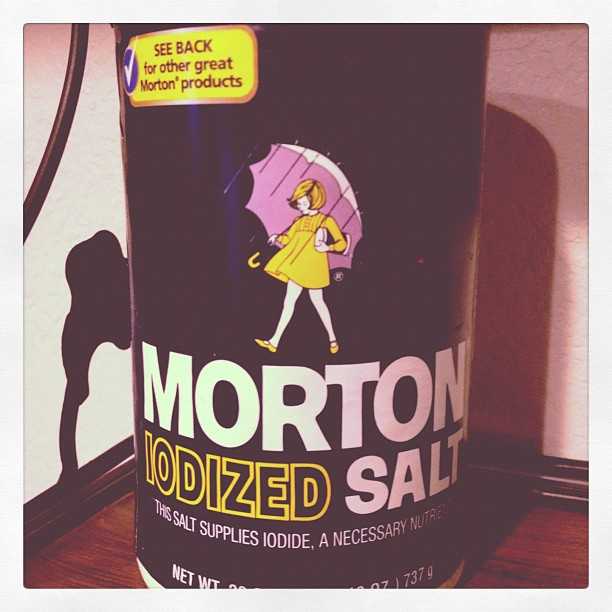
Salt. Many folks have stockpiled some salt in their prepper food lockers, hopefully iodized because iodine is SO important to health, and we get it from so few foods. However, just yesterday I discovered the iodine added to salt is fragile and dissipates rapidly, which means if the salt is more than a few months old, the iodine has virtually vanished.
This is equally important for those with thyroid problems who need the iodine, aqnd those at risk of goiter problems in the absence of iodine. Worldwide, iodine deficiency affects about two billion people and is the leading preventable cause of mental retardation. The USDA recommends a minimum of 150 mcg of iodine per day for both men and women.
Iodine was added to salt around 1924, at the request of government initiatives, due to the growing need for regulation of iodine deficiency disorders. In the 1920′s era in the United States, the Great Lakes and Pacific Northwest region of the country experienced high incidences of goiter (a common thyroid-malfunction-based condition). This was because their soil levels were extremely low in iodine, and people weren’t eating iodine rich foods .
To be on the safe and healthy side, I suggest adding some dried kelp to your storage locker. Dried seaweeds are a good source of iodine as well as many trace minerals, and is often salty enough to use in place of salt, or with a lesser amount of salt.
I have several quart jars of seaweeds in my pantry, notably kombu (kelp), hiziki, dulse, nori (in sheets) and Wakame. Probably that's not enough to have in storage, and I live far from the coast where seaweed is easily harvested.
1 tablespoon of Kelp contains about 2000/mcg of iodine, 1 tablespoon of Arame contains about 730/mcg of iodine, 1 tablespoon of Hiziki contains about 780/mcg of iodine, 1 one inch piece of Kombu contains about 1450/mcg of iodine, 1 tablespoon of Wakame contains about 80/mcg of iodine. I recommend sprinkling them in soups or on salads.
If you have eaten a California Roll, you have eaten the seaweed called Nori.
 |
| Nori Sheet by psd |
 | ||
| Oarweed by La.Catholiquehttp://www.flickr.com/photos/lacatholique/6118562625/ |
Here is a whole big thicket
of oarweed kombu. In OR, no license is required for personal seaweed
harvesting, although there is a limit of 10 lbs per person. For WA, you must
obtain a license through the WA Dept. of Fish and Wildlife. It's also important
to check for closures or other health risks prior to harvesting. See this site
for contacts for WA state. http://wdfw.wa.gov/fishing/shellfish/shellfish_seaweed_rules.html
 | ||||
| Kelp Drying in the sun, by garycycles3 |
I happen to like Dulse a lot; it makes a slightly sweet rather than salty snack just by itself. I am out of it, and I couldn't find a decent free photo on the internet to use here. Dulse is one of the red algaes, whereas kelp is considered a brown algae.
There are many edible seaweeds. Check out Edible Seaweed here.
How to prepare and cook seaweed.
Friday, December 14, 2012
Minerals, and the Stalwart Scots of Old...
Two, three, and more centuries ago, the Scots in the Highlands (and those in the Southern Uplands) were stalwart, hearty men who were able to hunt or fight in battle all day without fatigue. We know they often raised sheep, and they fished and hunted deer, but their main carbohydrates were from the oats and barley they grew.
I haven't found any descriptions of the nutritional value of the oats and barley they grew back then, but you can be sure they were more nutritious, especially in mineral content, than what is grown today. As Dr. Shanahan points out in her book, it was common practice to replace the thatching on their crofts every year, and put the used thatch on their gardens. One big difference in that practice, and the mulching we do today, is the mineral content of the thatch.
The Scots usually heated their crofts with peat fires where wood was scarce, and the smoke rose and escaped through loose areas in the thatch. The thatch itself collected minerals from the smoke. The cooking/heating fires were often directly on the floor, and crofts had a chain and
hook hanging from the roof above. This could hold a potful of porridge, an iron
kettle of boiling water, or a griddle for baking bannocks or flat oat bread.
The fires were seldom allowed to go out completely, and the thatch collected the smoke and minerals all year long. I suspect the carbon collected from smoke in the thatch was biochar. By putting this mineral-rich material back into their gardens when they re-thatched annually, they kept the soil re-mineralized.
We fail to do that today, not because we don't have peat fires and thatched roofs anymore, but because home garden advice stresses NPK, and occasionally calcium/lime to "sweeten" the soil. The ignored and overlooked micronutrients are so very important to good garden health, and therefore our own health.
If you truly care about health, give yourself the gift of a good soil survey (not the cheap kind from the Extension Service) that tests minerals and micronutrients. It's not necessary to do it very often once you get the soil adjusted. Your plants will thank you, and your healthy body will thank you.
Monday, December 10, 2012
Teaching our genes new tricks
One of the concepts in the book I'm reading (Deep Nutrition, Why Your Genes Need Traditional Food) speaks to our genes' ability to learn even as we age. I initially fought that concept as completely foreign to what I've been taught to believe, but over the last several months of trying to discard my preconceptions, I've had a change in attitude.
Dr. Shanahan writes of our cellular structure, and what has been learned from the Human Genome Project that has led to the new field of Epigenetics. Each cell in our bodies contains a nucleus, floating inside the cytoplasm, like the yolk of an egg. This nucleus holds 46 chromosomes, and each chromosome contains up to 300 MILLION pairs of nucleic acids. She says if we could stretch out the strands of all the DNA in a single human body, it would stretch to the moon and back more than 5,000 times!
That's a LOT of chemical information, but in reality our genes only make up 2% of the structure of a cell. The other 98% was thought to be "junk" because scientists didn't know what it was, or how it functioned.
Now epigenetic scientists are discovering the "junk" is really a massive, complicated regulatory center, assisting our biology in the never-ending, moment-to-moment decision-making. It responds to every molecule that we put into our bodies (and even the air we breathe), and when it's fed real food, it knows how to produce health. When it gets junk, it gets crazy, jumbled signals that ultimately lead to dis-ease.
Our genes make decisions based in part by the chemical information in the foods we eat.
In effect, our DNA collects information from food, and
it is in our best interests to give it the best food we can.
Plus, our genes have to be activated for results. One example the author gives is calcium and Vitamin D. If the gene for building bone gets both, then it can perform as it should. But if we are too low or even depleted of Vitamin D, all the calcium we can ingest will not build or repair bone.
Think about this: a single sperm cell mated with a single-celled egg to produce each of us. As the cells divided, how did our genes/DNA know whether to make an eyeball, or a foot?
At some point I will talk about Dr. Shanahan's food suggestions, although they are not a whit different than what I have posted about over the last 3 years. Sometimes we just need reminders.
This post is just a short distillation of some of her text on how our bodies actually function at the cellular level, something she takes pages and pages to explain. I could not begin to explain it, and can only encourage you to read her book if you want to understand and gain better health, and better genes to pass along to future generations.
Monday, July 16, 2012
My Health Update
I know many of my blog readers have known me for a long time (and some know me personally), I thought I'd post a brief update on my health status.
I had some medical tests this past week at Univ. Virginia Medical Center in Charlottesville, including an Esophagogastroduodenoscopy (EGD) where they put me to sleep and a small camera is run down through the pharynx, esophagus, stomach, and duodenum to look for potential bleeders. From the feedback from the techs and nurses (unofficial), everything seems to be okay. I go back again in early August for some additional appointments.
I'm getting weary of the long (and expensive) trips that require a stay-over because it's so far, and gas prices are going up again. However, I'm glad these recent tests appear to be positive in outcome.
Thanks for your continuing support and encouragement!
Wednesday, February 15, 2012
Pork, and Health
I love.love, love bacon, ham, pork chops... and for many years I have wondered why some cultures and religions do not allow pork in their diets. I suppose I assumed (maybe like many others?) that in the early days of civilization it was probably due to trichinosis, and the absence of any kind of refrigeration. However, I've never seen any reasons given for the dietary restrictions, just to avoid them, and I always want to know why restrictions exist for anything.
The late Dr. Carey Reams (RBTI) even forbade pork in his protocol for good health, merely saying it was bad to consume. (Reams was a dedicated Christian, and nothing I have read in the Christian New Testament forbids pork. Most of the major restrictions about pork are found more in Jewish and Muslim dietary laws, and the Christian Seventh-Day Adventists.) There are a number of sites about RBTI, and Dr. Carey's book, Choose Life or Death, The Reams Theory of Ionization is considered "the ultimate text", quite popular (and scarce) even now.
I have been interested in Reams' work for several years because he developed a test for determining the quality of the soil, which in turn determines our health... and you know I'm big on soil health and thus our own health. I really don't know a lot about RBTI, but I did become curious about why he forbade pork.
I do muscle testing, sometimes known as AK, or Applied Kinesiology, to test whether any food or supplement is good for my body. Up until just a few weeks ago, pork has tested okay for my body... then it changed to being a no-no, and I have no clue why. My opinion is that as my body gets healthier, the nutritional requirements change (meaning I tolerate crappy food less and less, although my pork is pastured pork and I do not consider it crappy), but I have no basis in fact for that idea.
Then several weeks ago I read a paper about how various preparation methods for pork affect red blood cell clumping, and some things started to make sense. (You'll have to read it... too lengthy to explain here). The paper showed that some pre-treatments like marinades and curing make a difference, and showed some slides of red blood cells before and after for documentation. Since my background includes a long stint in cardiovascular research at Johns Hopkins, it made sense to me!
I had a bag of meaty pork bones in the freezer to make stock, so I did my muscle-testing with them raw. They tested NOT GOOD for me. Having nothing to lose but a bag of bones, I soaked the bones in about a cup or two of Bragg's Raw Apple Cider Vinegar for 24 hours in the refrigerator, turning every few hours. A second muscle test after 24 hours said they were GOOD FOR ME, so I rinsed them and roasted at 425ºF until they were crisp. There was a goodly amount of meat on some of the ribs, which I immediately ate.
To my surprise, there was absolutely NO taste of vinegar in the roasted pork despite a 24 hour vinegar soak, and the meat was delicious! The bones were then cooked in my usual stock recipe, and I think the cooked pork stock from those bones (with aromatics) will be equally good.
I always add some ACV or lemon juice to any bones in a pot of water for stock since it helps extract the good minerals like calcium from the bones, but I've never soaked the meat alone before in a larger amount of ACV. I'll always do that from now on with pork.
I make a lot of sausage patties, generally without any curing salts since I just freeze them and use them up quickly. Even my venison sausage has fatty pork added because venison is so lean. I haven't tested my body yet on the sausages I made several weeks ago, but if they test not good for me, I may try an overnight marinade or ACV soak to see if that changes it. I'd hate to throw away a few pounds of otherwise good sausage!
ps, found this post, Feb. 13 about pork consumption may cause cirrhosis.
ps, found this post, Feb. 13 about pork consumption may cause cirrhosis.
Thursday, February 9, 2012
"Specialty Crops" and the Farm Bill

In trying to understand how and why our government has allowed so much adulteration of my food supply, I finally had to start following the money. A lot of the money comes from Farm Bill subsidies...and the Farm Bill must be the recipient of the most expensive lobbying in our history, outside of maybe the presidential campaigns!
I bet you have never read any portion of the Farm Bill. It's not an easy task, reading through the Farm Bill. The last one, passed in 2008 (good for 5 years) weighed in at 1,770 pages. I wonder if even those that write it have a clear, full picture of all of it... too many fingers in the pie. I certainly don't understand much of it, yet it affects us all, daily.
There are, however, some glaring facts and omissions, plus at least one or two really good programs.
First, the good:
Programs like SNAP (formerly called food stamps) are fully funded by the Farm Bill, and the National School Lunch Program and other school-based child nutrition programs get some funding from it,as I understand the inter-agency convolutions. Another small Farm Bill program gives farmer's market vouchers to low-income senior citizens like me. Although the vouchers are cumbersome to use (each voucher is for $5 and no vendor is allowed to give change), I made some use of the $40 I got in vouchers in 2011, probably getting around $20 total in produce for my vouchers. But it wasn't really very fair economically, because our tax dollars paid $40 for my $20 of produce. The vendors should be able to give change, even if if it's just another smaller-amount voucher to use later.
Did you know that the fruit and vegetable products that hit our grocery stores are
only considered as "specialty crops" by the USDA, and that is how they are
handled by the Farm Bill? Handled only as "bit players" on the sidelines in the Farm Bill. Only 1% of the Farm Bill goes towards specialty crops.
I don't know about you, but I'd choose to use some of our tax dollars to support local, ethical family farmers who grow my apples, carrots, beans and broccoli. And more specifically, the organic farmers who do not infuse my fruits and vegetables with pesticides and herbicides.

The not-so-good
The products the Farm Bill mainly subsidizes are the five big commodity crops: corn, wheat, rice, soybeans
and cotton. The dollar value of the commodity crops the US exported in 2010 was $108,662,000,000, and we subsidized them to grow it. The payments go out regardless of need. In fact, since 1995, a mere 10 percent of all subsidized farms – only the largest and wealthiest operations – have raked in 74 percent of all subsidy payments. The money kept on coming right through the five highest earnings years ever for farm income. (Source)
Commercial corn farmers made a killing in 2011, mainly because they were subsidized to provide corn for the failing ethanol program, feed corn for CAFO's, and of course, for the high fructose corn syrup used in far too many packaged items on the grocery shelves.
Then there's soy...
Soy is a known obesogen (which leads to weight gain) as well as a known goitrogen (substances that suppress the function of the thyroid gland which also leads to weight gain; think: goiter) and in spite of the rising obesity levels and consequential health care costs in the US, the 2007-2012 Farm Bill allocated $42 billion of our tax money for industrial farmed GMO soy beans. Data from the USDA indicates 94% of all soybean crops in the US are GMO, and the FDA even pushes soy... “Diets that include 25 grams of soy protein a day may reduce the risk of heart disease.”
Did I miss somewhere that being overweight (thanks in part to chemicals in soy) reduces the risk of heart disease?
There are three problematic monocultures in industrial agriculture: corn, soy, and sugar. U.S. Farm Bill subsidies for these (as well as for other commodity crops) encourage cheap and unhealthy foods and food fillers, sick GMO-fed animals whose meat enters our food system, extreme pesticide use, and damage to soil and water sources. The Commodity Cropism
project seeks to expose veiled information about these crops, and
provide the public with data left out or obscured by loosely monitored
food production and labeling systems.
Monsanto’s GMO Beet sugar seed is now used by 95% of beet farmers (usually under multi-year binding seed contracts they can't get out of), who supplied
around 50% of the nation’s sugar in 2011... 64 pounds per person per
year, up 28%.
I have read that US foreign aid policies are very often include a clause that requires the receiving nation to accept and use Monsanto GMO seed as a requisite for getting our aid. What's with that??
When was the first food and farm bill signed into law and why?
The first one was signed into law as a temporary measure in 1933 as a
way to aid farmers suffering in the Great Depression. Since then it has
come before Congress roughly every five years. Nutrition programs were
added to the farm bill in the late 1970s to win the support of lawmakers
from urban districts. The 2008 Farm Bill had a price tag of nearly $300
billion. It expires in 2012.
Since a lot of the money does go to nutrition programs like SNAP, it’s time to start calling it a "food
and farm bill" and to increase investments in healthy food programs. A
top priority is to protect food assistance programs for the neediest,
especially in the lingering aftermath of the 2008 recession. ... work to improve and expand programs that increase access to healthy
foods, strengthen local and regional food systems and provide new
markets for diversified, local, sustainable and organic growers and
ranchers. (Source)
I'd like to see subsidies (IF THEY ARE REALLY NECESARY) used properly, and not just be "gimmies" for BigAg... and I agree with the Environmental Working Group... I, too would like to see a chunk of the farm subsidy dollars
shifted to conservation programs. This would help fund programs that
protect soil, water and air quality, preserve wildlife habitat, and
conserve energy and water. In my opinion, if we don't conserve what's left (pitiful as it may be) there won't be many future crops.
Update: I wrote this about mid-January 2012, and on Feb. 1 read an interesting article on this general subject by Sharon Astyk that you may wish to read. She does a great job of explaining the cost of a gallon of milk, although there's much more to the article. Click here.
Thursday, December 8, 2011
Walk the Talk
As much as I continually suggest we should all eat nutritious, real food... I fell off the wagon a year ago. Actually I didn't fall... it was a very long, slow descent, adding a few empty calories here and there... until the additives (which are designed to addict) took over after a few months. I even lost the habit of taking my few daily vitamins. As a consequence, my energy levels are down and my weight is up. So it's time to get back with the program.
I don't have the disorder known as SAD (Seasonal Affective Disorder) but I can sure tell the difference in how I feel on bright, sunny days, even in winter. My self-diagnosis is a shortage of Vitamin D3 (the sunshine vitamin) and I started taking it again this very morning. I take about half a teaspoonful of fermented cod-liver oil in a gel that's mixed with a high-vitamin A butter oil made by Green Pastures. Mid-day and evenings I take a less expensive D3 gel cap.
A good breakfast had fallen by the wayside too, giving way to something high-carb and/or high sugar with my 2nd cup of coffee. I picked up 2 dozen farm eggs (from chickens fed NON-GMO feed) and some decent organic bacon this weekend, but not enough for the whole month because I didn't intend to start this until January, after the holidays. (It may still be just half-measures over the holidays.)
I'll need to make another trip to the nearest natural foods store (80-90 miles one way) later in the month to re-stock, plus buy some fresh yogurt to inoculate/make my own. I should order some kefir grains too. Mine were stored in milk in the fridge but unmarked, and I accidentally discarded them. Probiotics are an important part of a good food regime for me.
I don't expect the first several weeks will be easy, and I know that every time I nosh on something not good for me, it will just lengthen the time of adjustment back to well-being. No doubt I'll be cranky as a bear much of the time, but the Vitamin D3 should help.
I can't promise this change won't affect my every-other-day postings for the next few weeks. I will do my best, but they may contain some rants against the food companies where their designed use of addiction additives helped my fall from the wagon.
Wednesday, October 26, 2011
Septic Leach Field, and Garden Woes
Damn and Double-Damn!! Seems I've discovered a potential minefield with moving my garden area higher up from the creek, which puts it closer and downhill from our septic tank and leach-field system. Frankly, I hadn't given the septic system any thought until now.
In my process of sheet-mulching a large area for a new garden, last weekend I started also considering the addition of 2-3 small sheet-composted areas nearby as prep for planting a couple of fruit or shade trees in the spring. Now I find that would put the trees smack-dab in the approximate area of either the tank, the leach-field, or both. You are not supposed to plant trees over the septic area because the tree roots can invade and damage the system.
In my process of sheet-mulching a large area for a new garden, last weekend I started also considering the addition of 2-3 small sheet-composted areas nearby as prep for planting a couple of fruit or shade trees in the spring. Now I find that would put the trees smack-dab in the approximate area of either the tank, the leach-field, or both. You are not supposed to plant trees over the septic area because the tree roots can invade and damage the system.
According to everything I read online, eating foods (including tree fruits) grown over a leach
field or just downhill from it, could be hazardous to health. That's a very
scary thought!
I did find the diagram for the septic system permit in our house closing papers, and it's rather vague about exact location. That hasn't bothered me until now, but in considering what kind of trees to plant, or where to plant vegetables, the location IS of utmost importance.
The tank hasn't been pumped in years as far as I know, and certainly not in the 5 years we've been here. It needs pumping now, and a pump tanker can't get under our low-clearance covered bridge over the creek. The tanker will have to come across the neighbor's field, and I'll have to take down a section of fence. The tanker also will probably have to drive over the fragile leach field to get to the tank too, unless they have a very long hose.
The other disturbing thing I found out is the expected life of a leach field... which with the best maintenance is around 20-25 years. Years ago most leach firlds used small sections of terra cotta pipe, which have a very long life expectancy if tree roots don't get in them. More recently, most leach fields use cheaper perforated plastic pipe, which can silt up.
Our system was installed in 1986, exactly 25 years ago, and surely has perforated plastic pipe. Not knowing the exact location and extent of the leach area, the huge area where I recently added a foot of compost and berms could be over part of the leach field!
Our system was installed in 1986, exactly 25 years ago, and surely has perforated plastic pipe. Not knowing the exact location and extent of the leach area, the huge area where I recently added a foot of compost and berms could be over part of the leach field!
Unfortunately, the only somewhat level area on our property for a veggie garden of any kind is on the side of the house with the septic system. The septic tank appears to be above any potential garden area, so it would all percolate downhill.
I have someone from Environmental Health coming out this week to assess the situation. No doubt I'll then need to hire someone to locate the tank, bring in heavy equipment to dig up the lid, and a tanker to pump it out. We won't be able to even assess the leach field until we can measure the scum layer and the sludge layer inside the tank.
I am NOT a Happy Gardener!
I am NOT a Happy Gardener!
Sunday, October 2, 2011
We Humans are 4% Minerals
Yep, that's right... this post is about the 4% of our bodies that are minerals, but a very important 4%! It came about because someone asked me why I'm adding minerals (like Greensand and Azomite) to my new sheet-composted garden area.
96% of our human body is composed of oxygen, hydrogen, carbon and nitrogen... the other 4% of our body mass contains over 70 or more minerals, some in miniscule amounts and most of which are unfortunately no longer readily available in our soils. Without that mere 4%, we would die.
Minerals participate in a multitude of bio-chemical processes necessary for the maintenance of health in human beings, animals and plants that inhabit our planet. There would be no life without minerals!
Minerals control literally millions of chemical and enzymatic processes which occur in the human body at all times. That alone should make us want to know more of the importance of minerals for our health and survival, and what to do about the current lack.
Minerals control literally millions of chemical and enzymatic processes which occur in the human body at all times. That alone should make us want to know more of the importance of minerals for our health and survival, and what to do about the current lack.
So What's the Big Deal about Adding Minerals to my Soil??
Simple. If the soil doesn't have the minerals, there's no way for vegetables to absorb them!
Consider: We no longer get as many minerals from our vegetables as we got 50 years ago. The nutritional value of modern foods isn't just declining, it's collapsing. We cannot live healthily without adequate minerals; they are the fundamental source and the basic building blocks of life.
Over-farming, soil depletion, commercial fertilizer, hybrid crops and genetic modifications are slashing the nutrients found in our fruits and vegetables. In fact, we'd have to eat 10 servings of spinach to get the same level of minerals as from just one serving about 50 years ago.
And that's only the beginning.
Take a look at the United States Department of Agriculture's (USDA) nutritional values for fruits and vegetables today compared to 1975.
Apples: Vitamin A is down 41%
Sweet Peppers: Vitamin C is down 31%
Watercress: Iron is down 88%
Broccoli: Calcium and Vitamin A are down 50%
Cauliflower: Vitamin C is down 45%; Vitamin B1 is down 48%; and Vitamin B2 is down 47%
Collard Greens: Vitamin A is down 45%; Potassium is down 60%; and Magnesium is down 85%
And that's only the beginning.
Take a look at the United States Department of Agriculture's (USDA) nutritional values for fruits and vegetables today compared to 1975.
Apples: Vitamin A is down 41%
Sweet Peppers: Vitamin C is down 31%
Watercress: Iron is down 88%
Broccoli: Calcium and Vitamin A are down 50%
Cauliflower: Vitamin C is down 45%; Vitamin B1 is down 48%; and Vitamin B2 is down 47%
Collard Greens: Vitamin A is down 45%; Potassium is down 60%; and Magnesium is down 85%
To be fair, some vegetables appear to be gaining vitamins, or at least vitamin A. Carrots, for example, have more of the vitamin now than they did in 1963. Why is a still a mystery. But the phenomenon has apparently occurred just in the nick of time. The National Academy of Sciences has issued an alert that it takes twice as many vegetables to get the daily requirement of vitamin A as previously thought. (Carrots and pumpkin are exempt from the caveat.)
Despite the apparent increase of vitamin A in carrots, most vegetables are losing their vitamins and minerals. Nearly half the calcium and vitamin A in broccoli, for example, has disappeared. Collards are not the greens they used to be. If you're eating them for minerals and vitamin A, be aware that the vitamin A content has fallen from 6500 IUs to 3800 IUs. Their potassium has dropped from from 400 mg to 170 mg. Magnesium has fallen sharply-57 mg to 9. Cauliflower has lost almost half its vitamin C, along with its thiamin and riboflavin. Most of the calcium in pineapple is gone... from 17 mg (per 100 grams raw) to 7. And the list goes on and on.
However, this is not just a 21st Century phenomena!
Back in 1936, a group of doctors introduced Document No.264 to the floor of the United States Senate. It was a dire warning that the mineral content of the soil was eroding. Vegetables were losing their power and people were at risk. Unfortunately Congress did nothing.
Commercial farming methods have depleted the soil of every essential nutrient, except NPK (nitrogen, potassium, and phosphorous). Our planet's soil is being stripped of minerals, and generally nothing is being done to replace them.
Do we even eat enough vegetables?
No way. The preferred American meal is one-dish, already prepared. Unless a vegetable can be squirted out of a bottle, it’s a nonentity for too many of us. Why? We’re in a hurry. Vegetables are considered side dishes, and Americans don’t have time for such frivolity. The decline is relentless. Within the last 15 years, the percentage of all dinners that include a vegetable (other than salad or potatoes) dropped another 10%. It’s now 41%. (Data Source)
I haven't totally figured out the mineral thing yet in my garden, but I've been working on it going on 5 years now. (The Greensand and Azomite mainly add trace minerals rather than address the major ones like calcium, although they do contain some calcium.) Balanced soil minerals is very complex subject and I'm not convinced anyone has all the answers. For example, a mineral like calcium is one the microbes can/will eat and convert to plant food. We know the microbes make calcium available to plants, but which of the 5 or more forms of calcium should we put on our soils?
Until I can afford $150+ professional soil tests, I have to rely on what I can glean from my research and my gut intuition. My gut instinct tells me that adding trace mineral mixes like Greensand and Azomite has to help put some of that 4% of minerals back into my soil and thus into my vegetables.
My Thanks to Keith Scott-Mumby MD, PhD for the idea that sent me searching for more information on that 4% of our minerals.
Subscribe to:
Posts (Atom)